Children of Fukushima return, 6 years after tsunami set off nuclear crisis

For over 4 years, residents were barred from Naraha in Fukushima after an earthquake and tsunami
Fukushima earthquake, Fukushima tsunami, tsunami, Fukushima, earthquake, Japan
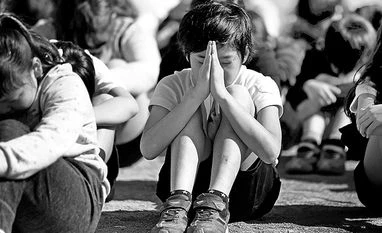
Students pay tribute to the victims of the 2011 earthquake and tsunami in Japan. Photo: Reuters
Motoko Rich Naraha (Japan)
Last Updated : Apr 23 2017 | 2:40 AM IST
The children returned to Naraha this spring.

For more than four years, residents were barred from this hamlet in Fukushima after an earthquake and tsunami caused a meltdown at a nuclear power plant north of town. When the government lifted the evacuation order in 2015, those who returned were mostly the elderly, who figured coming home was worth the residual radiation risk.

But this month, six years after the disaster, 105 students turned up at Naraha Elementary and Junior High School for the beginning of the Japanese school year.

Every morning, cafeteria workers measure the radiation in fresh ingredients used in lunches. In some grades, as few as six students take their lessons in classrooms built to accommodate as many as 30. There are not enough junior high students to field a baseball team on the new field next to the school.

Yet the return of the schoolchildren, the youngest of whom were born the year of the disaster, has been a powerful sign of renewal in this town, which is in the original 12-mile exclusion zone around the Fukushima plant. Reopening the school “is very, very meaningful,” said Sachiko Araki, the principal of the junior high school. “A town without a school is not really a town.” 

The new, $18 million two-story building has shiny blond wood floors, spacious classrooms, two science labs, a library filled with new books and a large basketball gymnasium. A balcony at the back of the building overlooks the sea.

Many emotions fuelled the decisions of the families who returned to Naraha. It was always a small town, with just over 8,000 people before the disaster. So far, only one in five former residents has come home.

A bank, post office and medical clinic are now open, but a supermarket is still under construction. Because neighbourhoods have stood empty for so long, wild boars sometimes roam the streets.

With thousands of bags of contaminated soil piled high in fields around town and radiation meters posted in parking lots, the memory of the nuclear disaster is never distant.

At the Naraha school, which was being constructed when the disaster hit, workers destroyed a foundation that had just been laid and started over, removing mounds of dirt in an effort to decontaminate the site.

Today, radiation is regularly monitored on the school grounds as well as along routes to the building. The central government, based on recommendations from the International Commission on Radiological Protection, set a maximum exposure of 0.23 microsieverts an hour, a level at which there is no concrete scientific evidence of increased cancer risk. (Microsieverts measure the health effects of low levels of radiation.)

Still, some teachers say they are extra careful. Aya Kitahara, a fifth-grade teacher, said she and her colleagues had decided it was not safe to allow children to collect acorns or pine cones in the neighbourhood for art projects, for fear that they would pick up small doses of radiation.

Nearby, a nursery school and day care centre was built mostly with money from the nuclear plant operator, Tokyo Electric Power Company, in 2007 and reopened this month. Keiko Hayakawa, the principal, said she was surprised that the city had pushed to bring back children before all bags of contaminated soil had been cleared from town.

“We had to start and keep moving to open this facility as soon as possible,” Hayakawa said on a morning when 3- and 4- year-olds romped in a large playground, climbing a jungle gym, riding scooters and digging in a sandbox. “Otherwise, there was a fear that people might never come back.”

Calculations of radiation exposure are imprecise at best. They may not detect contaminated soil from rain runoff that can collect in gutters or other low-lying crevices. Risk of illness depends on many variables, including age, activities and underlying health conditions. “I don’t want to accuse anyone of being consciously disingenuous,” said Kyle Cleveland, associate professor of sociology at Temple University in Tokyo, who has written about the psychological effects of the Fukushima disaster. But government officials “have every incentive to downplay the level of risk and to put a positive spin on it.”

Reviving the towns of Fukushima is also a priority for the central government. With the 2020 Olympics to be held in Tokyo, Prime Minister Shinzo Abe wants to deliver on his promise that the Fukushima cleanup effort is “under control.”
©2017 The New York Times News Service 

One subscription. Two world-class reads.

Already subscribed? Log in

Subscribe to read the full story →
*Subscribe to Business Standard digital and get complimentary access to The New York Times

Smart Quarterly

₹900

3 Months

₹300/Month

SAVE 25%

Smart Essential

₹2,700

1 Year

₹225/Month

SAVE 46%
*Complimentary New York Times access for the 2nd year will be given after 12 months

Super Saver

₹3,900

2 Years

₹162/Month

Subscribe

Renews automatically, cancel anytime

Here’s what’s included in our digital subscription plans

Exclusive premium stories online

  • Over 30 premium stories daily, handpicked by our editors

Complimentary Access to The New York Times

  • News, Games, Cooking, Audio, Wirecutter & The Athletic

Business Standard Epaper

  • Digital replica of our daily newspaper — with options to read, save, and share

Curated Newsletters

  • Insights on markets, finance, politics, tech, and more delivered to your inbox

Market Analysis & Investment Insights

  • In-depth market analysis & insights with access to The Smart Investor

Archives

  • Repository of articles and publications dating back to 1997

Ad-free Reading

  • Uninterrupted reading experience with no advertisements

Seamless Access Across All Devices

  • Access Business Standard across devices — mobile, tablet, or PC, via web or app

Next Story


