China adjusts Covid-19 restrictions in city with key Apple iPhone plant

As of Nov 30, Zhengzhou will remove so-called mobility controls -- a euphemism for lockdown -- and replace them with "normal Covid-combating measures
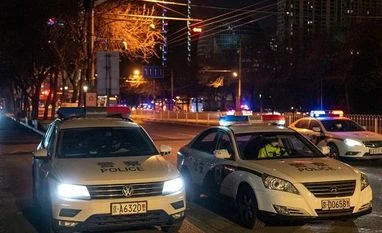
China Police, China protest, Beijing, anti-covid lockdown protest in China, covid protest
Police officers guard the site of a planned protest in Beijing, on Nov 29 (Photo: Bloomberg)
Debby Wu | Bloomberg
3 min read Last Updated : Nov 30 2022 | 7:42 AM IST
The Chinese city of Zhengzhou shuttered hundreds of buildings and apartment blocks hours after lifting broader lockdown measures, as officials strive to make their Covid controls more targeted in line with Beijing’s directives. 

The city, home to Apple Inc.’s largest manufacturing site in China, said late Tuesday that it was lifting a lockdown of its main urban areas put in place five days ago as Covid cases climbed. Authorities then issued a lengthy list of buildings that would be declared high risk spanning the greater Zhengzhou region, which means they will continue to be subject to lockdown-style curbs. 

The shift comes after China’s top health officials in Beijing reinforced an order for local cadres to avoid excessive curbs in containing the virus, following weekend protests where demonstrators took to the streets in several major cities in opposition to the stringent Covid Zero policy. 

As of Nov. 30, Zhengzhou will remove so-called mobility controls -- a euphemism for lockdown -- and replace them with “normal Covid-combating measures,” according to a post on the local government’s official WeChat account. Businesses will be allowed to resume operations in an orderly manner, and people outside of the high-risk areas won’t be subject to regular mandatory Covid tests as long as they don’t leave home. 

Beijing is urging local authorities to adhere to a 20-point playbook for virus control issued just over two weeks ago after a meeting of the Politburo Standing Committee, China’s top leadership body. While the guidelines caution against broader lockdowns and excessive mass testing, officials on the ground have struggled to control outbreaks in a more targeted way -- instead reverting to the cruder, wider measures of old. 

Tough Task
 
Zhengzhou has adjusted its restrictions a number of times over the past few weeks, with tensions at the vast Foxconn Technology Group factory known as “iPhone City” putting its response in the global spotlight. A lockdown of the district around the plant was lifted Nov. 9, and replaced with a web of high-risk areas that included the factory, which is currently in a so-called closed loop to keep operating. Two weeks later, on Nov. 24, authorities locked down Zhengzhou’s main urban areas as cases swelled.  

The city’s experience shows the difficulty officials have meeting Beijing’s twin priorities of wiping out Covid outbreaks, while being less disruptive to people’s lives and the economy. Anger at restrictions and their possible role in stymieing the response to an apartment block fire in Xinjiang, northwest China, sparked the weekend’s demonstrations, unprecedented during President Xi Jinping’s tenure. 

Goldman Sachs Group Inc. said on Monday that it saw a 30% chance of China exiting its tough Covid approach before April, earlier than widely anticipated, because of the public pushback.

Zhengzhou’s iPhone plant has also seen unrest, including a rare violent protest last week after almost a month under tough restrictions intended to contain an outbreak within the factory and enable employees to continue production.

Foxconn has been struggling to secure enough workers to crank out the latest iPhone 14 Pro devices, the most sought-after of Apple’s latest handset models, as many left outbreaks on the campus. The Taiwanese company is offering various incentives to retain existing workers while luring former employees back. 

Turmoil at the plant is likely to result in a output shortfall of close to 6 million iPhone Pro units this year, Bloomberg News has reported. 

One subscription. Two world-class reads.

Already subscribed? Log in

Subscribe to read the full story →
*Subscribe to Business Standard digital and get complimentary access to The New York Times

Smart Quarterly

₹900

3 Months

₹300/Month

SAVE 25%

Smart Essential

₹2,700

1 Year

₹225/Month

SAVE 46%
*Complimentary New York Times access for the 2nd year will be given after 12 months

Super Saver

₹3,900

2 Years

₹162/Month

Subscribe

Renews automatically, cancel anytime

Here’s what’s included in our digital subscription plans

Exclusive premium stories online

  • Over 30 premium stories daily, handpicked by our editors

Complimentary Access to The New York Times

  • News, Games, Cooking, Audio, Wirecutter & The Athletic

Business Standard Epaper

  • Digital replica of our daily newspaper — with options to read, save, and share

Curated Newsletters

  • Insights on markets, finance, politics, tech, and more delivered to your inbox

Market Analysis & Investment Insights

  • In-depth market analysis & insights with access to The Smart Investor

Archives

  • Repository of articles and publications dating back to 1997

Ad-free Reading

  • Uninterrupted reading experience with no advertisements

Seamless Access Across All Devices

  • Access Business Standard across devices — mobile, tablet, or PC, via web or app

Topics :CoronavirusApple iPhonesChinaBeijing

Next Story



