China chip policy poses risk to US firms

Technology advisers suggest steps to counter China's push
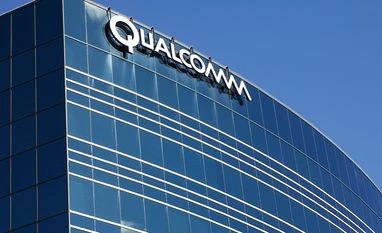
Qualcomm interest in mobile phone manufacture in India
David McLaughlinIan King
Last Updated : Jan 08 2017 | 12:06 AM IST
China’s push to develop its domestic semiconductor technology threatens to harm US chipmakers and put America’s national security at risk, the Obama administration warned in a report that called for greater scrutiny of Chinese industrial policy.

China’s goal to achieve a leadership position in semiconductor design and manufacturing, in part by spending $150 billion over a 10-year period, requires an effective response to maintain US competitiveness in the industry, according to the report released Friday.

“We found that Chinese policies are distorting markets in ways that undermine innovation, subtract from US market share, and put US national security at risk,” the President’s Council of Advisors on Science and Technology said in the report.

The warnings about China could give ammunition to President-elect Donald Trump two weeks ahead of his swearing in. Since winning the election, Trump has backed up fiery campaign rhetoric toward China with a series of pronouncements on Twitter and the appointment of China hawks to key roles. 

Chinese scrutiny

China is prepared to step up its scrutiny of US companies in the event Trump takes punitive measures against Chinese goods, according to people familiar with the matter, Bloomberg News reported Thursday.

The options include subjecting well-known US companies or ones that have large Chinese operations to tax or antitrust probes, the people said, asking not to be identified because the matter isn’t public. Other possible measures include the launch of anti-dumping investigations and scaling back government purchases of American products, according to the people.

“China has gained from global openness but has been less committed to sustaining it — and, in some cases, has worked against it,” the White House report said. “Now, globally, more countries are questioning the benefits of economic openness — a trend that will shape, and be shaped by, how the United States responds to challenges in the semiconductor arena.”

US industry leaders don’t want Trump to engage in a standoff with China. Giving corporate tax breaks to US companies is the way Trump advocates bringing back jobs to this country, according to Intel  Chief Executive Officer Brian Krzanich.

“The real answer is not a trade war, it’s not restrictions, it’s really about making the US more competitive,” Krzanich said on CNBC Friday. “Lowering the tax rates, making it easier for people to do manufacturing here, that’s what will bring manufacturing back to the US.”

Working group

Krzanich attended the recent meeting between the president-elect and leaders of technology companies. The Council of Advisors on Science and Technology’s semiconductor working group includes several industry executives such as Paul Otellini, the former chief executive officer of Intel, and Paul Jacobs, the chairman of Qualcomm.

Foreign acquisitions of US businesses are routinely reviewed for national security risks by a panel of officials led by the Treasury Department. That panel — the Committee on Foreign Investment in the US — has frustrated some Chinese investment in the US semiconductor industry. In December, President Barack Obama blocked a Chinese company from buying the US business of Germany’s Aixtron, a semiconductor-equipment supplier.

The White House report recommends a strategy for US policy makers that includes countering “innovation-inhibiting” Chinese industrial policy and improving the business environment for US chipmakers. It suggests broadening what is considered a national security risk as part of CFIUS reviews in certain circumstances, while also cautioning against blanket opposition to China’s advancement in the industry. US officials should also work with allies to strengthen global export controls, according to the report.

Industry leaders

The US has led the semiconductor industry since it took off in the 1960s. Companies such as Intel and Qualcomm have pushed the technical bounds of innovation in the $300 billion market. In 2015, China didn’t have one company among the top 10 industry suppliers. China, the world’s most populous country, is nonetheless the biggest buyer of the electronic components.
 
The main rivals to the US’s dominance are in South Korea and Taiwan, where companies such as Samsung Electronics, the second-largest chipmaker by revenue behind Intel, and Taiwan Semiconductor Manufacturing have gained ground over the last decade.

Chinese subsidies

To strengthen its position in chip manufacturing, China relies on subsidies for domestic suppliers, according to the White House report. That can harm US firms by allowing Chinese companies to sell below cost and reduce US market share, the report says. China also encourages domestic customers to buy only from Chinese suppliers and requires technology transfer to China in exchange for access to its market, the White House said.

A representative of the Chinese embassy in Washington didn’t respond to an e-mail seeking comment about the report.

Underlining some of the difficulties that US chipmakers have faced gaining unfettered access to their largest market, in February 2015, Qualcomm announced it had paid $975 million to settle a case brought by China’s National Development and Reform Commission accusing the company of abusing its dominant position in the chip market for mobile phones. Under the settlement, Qualcomm agreed to lower its licensing fees for phones sold in China to rates that are lower than it charges in other countries, but it’s still striving to get Chinese handset makers to pay up.

One subscription. Two world-class reads.

Already subscribed? Log in

Subscribe to read the full story →
*Subscribe to Business Standard digital and get complimentary access to The New York Times

Smart Quarterly

₹900

3 Months

₹300/Month

SAVE 25%

Smart Essential

₹2,700

1 Year

₹225/Month

SAVE 46%
*Complimentary New York Times access for the 2nd year will be given after 12 months

Super Saver

₹3,900

2 Years

₹162/Month

Subscribe

Renews automatically, cancel anytime

Here’s what’s included in our digital subscription plans

Exclusive premium stories online

  • Over 30 premium stories daily, handpicked by our editors

Complimentary Access to The New York Times

  • News, Games, Cooking, Audio, Wirecutter & The Athletic

Business Standard Epaper

  • Digital replica of our daily newspaper — with options to read, save, and share

Curated Newsletters

  • Insights on markets, finance, politics, tech, and more delivered to your inbox

Market Analysis & Investment Insights

  • In-depth market analysis & insights with access to The Smart Investor

Archives

  • Repository of articles and publications dating back to 1997

Ad-free Reading

  • Uninterrupted reading experience with no advertisements

Seamless Access Across All Devices

  • Access Business Standard across devices — mobile, tablet, or PC, via web or app

Next Story



