
China to launch 3 artificial moons with mirrors to provide 24-hour sunlight
Three manmade moons will be launched into space by China in 2022
 "China to launch 3 artificial moons with mirrors to provide 24-hour sunlight")
WebinarsNew
Deep DiveNew
Explore Business Standard
Three manmade moons will be launched into space by China in 2022
China is preparing to launch three artificial moons in space in 2022, the state-run Science and Technology Daily reported.
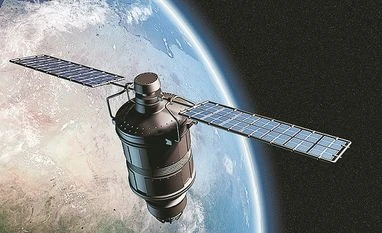
The artificial or manmade moon is a satellite carrying a huge space mirror, which can reflect the sunlight to the Earth.
According to plans, the verification of launch, orbit injection, unfolding, illumination, adjust and control of the manmade moon will be completed by 2020, the daily reported, quoting Wu Chunfeng, head of Tianfu New District System Science Research Institute in Chengdu in China's southwest Sichuan province.
Three manmade moons will be launched in 2022, it said.
"By then, the three huge mirrors will divide the 360-degree orbital plane, realising illuminating an area for 24 hours continuously," Wu said.
The reflected sunlight can cover an area of 3,600 sq km to 6,400 sq km, and the illumination intensity is expected to be eight times of the moonlight, he said.
The moon orbits the Earth about 380,000 km from the Earth, while the man-made moon is expected to be put on an orbit within 500 km from the Earth, the state-run China Daily reported.
About concerns that the manmade moonlight will interrupt the normal day-night cycle of animals and plants, Wu said the light intensity and illumination time can be adjusted and the accuracy of illumination can be controlled within scores of meters. When a man-made moon is orbiting, people can only see a bright star in the sky.
A manmade moon is especially useful in the civil area.
"Using manmade moon to illuminate an area 50 sq km can save 1.2 billion yuan of electric charge," Wu said. "It can also illuminate blackout areas when natural disasters such as earthquake happen."
The US and Russia have explored manmade moon, hoping it can bring convenience to night-time activities.
In the 1990s, Russia carried out an experiment called Banner, testing the idea of using a mirror to reflect the sunlight to Earth. The mirror failed to unfold in space and the experiment was halted.
"China, Russia, the US, Japan and the EU are all striving to make technological breakthroughs on space energy application," Wu said.
First Published: Oct 18 2018 | 8:20 PM IST


 Connect with us on WhatsApp