
Covid-19: Omicron reaches China's political, financial and tech hubs
China has detected locally-transmitted omicron infections in the capital Beijing, the financial center Shanghai, and Guangdong
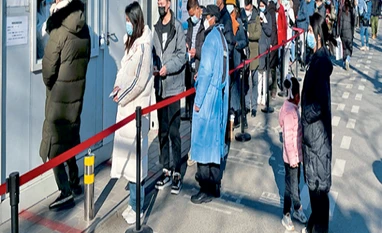 "Covid-19: Omicron reaches China's political, financial and tech hubs")
premium
Explore Business Standard
China has detected locally-transmitted omicron infections in the capital Beijing, the financial center Shanghai, and Guangdong
Already subscribed? Log in
Subscribe to read the full story →

3 Months
₹300/Month
1 Year
₹225/Month
2 Years
₹162/Month
Renews automatically, cancel anytime

Over 30 premium stories daily, handpicked by our editors


News, Games, Cooking, Audio, Wirecutter & The Athletic
Digital replica of our daily newspaper — with options to read, save, and share


Insights on markets, finance, politics, tech, and more delivered to your inbox
In-depth market analysis & insights with access to The Smart Investor


Repository of articles and publications dating back to 1997
Uninterrupted reading experience with no advertisements


Access Business Standard across devices — mobile, tablet, or PC, via web or app
First Published: Jan 17 2022 | 11:45 PM IST

