4 min read Last Updated : Apr 27 2022 | 12:40 AM IST
Elon Musk could have a silent partner in his $44-billion deal to buy Twitter: the US tax code.
The head of Tesla and SpaceX announced on Monday an agreement to take Twitter private for $54.20 a share, pledging to equity finance $21 billion himself and use a $12.5 billion loan with his Tesla shares as collateral. Banks are committing another $13 billion in debt financing. Critics, including Senator Elizabeth Warren, say he is only able to do that because of lax taxation of billionaires.
“If you look at Musk’s ‘income’ as defined by our tax code, you see that the guy is really rich, but not rich enough to buy Twitter,” Steve Wamhoff, the director of federal tax policy at the left-leaning Institute on Taxation and Economic Policy, said. “When you look at a more complete definition of his income — including the parts that are not included as taxable income under our tax rules and thus not taxed — then you start to see how the guy can buy Twitter.”
Musk is using a tried-and-true strategy favoured by many American billionaires who have amassed highly appreciated stock — borrowing those assets to get cash without having to sell and pay taxes. Musk has a margin loan against some of his Tesla holdings for $12.5 billion of the deal.
The details of how Musk plans to come up with another $21 billion aren’t yet clear in the financing agreement. He could sell Tesla or other stock, which would incur a significant tax bill. It’s possible he could fund some of that by borrowing against his stakes in SpaceX and the Boring further using the IRS rules to tap tax-free cash.
Musk is worth $257.4 billion, according to the Bloomberg Billionaires Index. Much of that fortune is held in Tesla and SpaceX stock, which can grow indefinitely untaxed. For any loans against his assets, Musk also gets a tax write-off for the interest on that debt. Musk faced a multi-billion-dollar tax bill last year after selling a portion of his Tesla shares.
“Borrowing does not create any income in our system because the borrowing is offset by the obligation to repay,” Steve Rosenthal, a senior fellow at the left-leaning Urban-Brookings Tax Policy Center, said.
The ability of the mega-rich to largely choose when they pay taxes — by deferring sales to years in which they have losses to offset the liabilities, or simply holding assets until they die to avoid the levies entirely — has generated ire among many Democrats. Senators including, Warren, Bernie Sanders, and Ron Wyden have for years been working on various forms of wealth taxes that go after the fortunes that are often untouched by income tax rules.
Warren, who turned the idea of a 2 per cent wealth tax on the richest Americans into a campaign rallying cry in the 2020 Democratic primaries, said late Monday that Musk’s Twitter takeover exemplified the need for it.
President Joe Biden joined the fray earlier this month with his own “Billionaires Minimum Income Tax” that would tax the annual appreciation of the financial and business assets of people worth at least $100 million.
The known & the unknown
What we know
The price: $54.20 per share or $44 billion
The financing (part one): Musk’s raised $25.5 bn of fully committed debt and margin loan financing from banks
Who’s advising: Goldman Sachs Group, JPMorgan Chase, and Allen & Co. for Twitter. On Musk’s side, Bank of America and Barclays, alongside lead adviser Morgan Stanley
What we don’t
The financing (part two): No details on the $21-bn equity commitment from Musk
Who will run Twitter: Both CEO Parag Agrawal and Chairman Bret Taylor are in their roles, for now. Musk is already CEO of both Tesla and SpaceX
What’s next
The filing: Many of these details should be cleared up in a filing that Twitter is required to make with the SEC
Twitter’s first-quarter results: Twitter is scheduled to announce its latest earnings on Thursday
The shareholder vote: The deal is subject to a shareholder vote.

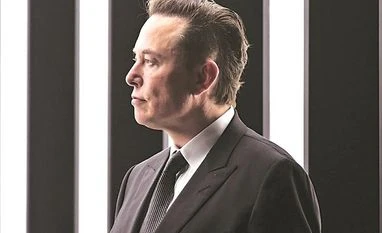 "Elon Musk's untaxed wealth is helping finance his Twitter buyout")











