Home / World News / Female foreign ministers press Taliban on Afghan girls' education
Female foreign ministers press Taliban on Afghan girls' education
Female foreign ministers from 16 countries said they are deeply disappointed that Afghan girls are being denied access to secondary schools and called on the Taliban to reverse their decision
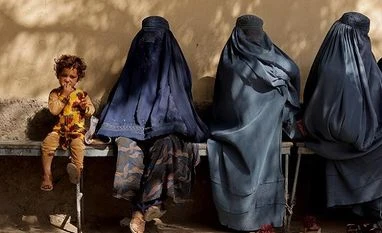
A girl sits with women wearing burqas outside a hospital in Kabul, Afghanistan (REUTERS/Jorge Silva)
Female foreign ministers from 16 countries around the world said on Friday they are deeply disappointed that Afghan girls are being denied access to secondary schools and called on the Taliban to reverse their decision. Diplomats from 10 countries sounded a similar message at the United Nations.
Afghanistan's Taliban rulers unexpectedly decided against reopening schools on Wednesday to girls above the sixth grade, reneging on a promise and opting to appease their hard-line base at the expense of further alienating the international community. So far, they have refused to explain the sudden decision.
"As women and as foreign ministers, we are deeply disappointed and concerned that girls in Afghanistan are being denied access to secondary schools this spring," the foreign ministers of Albania, Andorra, Australia, Belgium, Bosnia, Canada, Estonia, Germany, Iceland, Kosovo, Malawi, Mongolia, New Zealand, Sweden, Tonga and Britain said in a joint statement.
They said the decision is particularly disturbing as we repeatedly heard their commitments to open all schools for all children.
We call upon the Taliban to reverse their recent decision and to grant equal access to all levels of education, in all provinces of the country," they added.
At UN headquarters in New York, the Security Council had a closed-door discussion on the issue. Before it started, ambassadors from Albania, Britain, Brazil, France, Gabon, Ireland, Mexico, Norway, the United States and the United Arab Emirates stood together to decry the Taliban's decision.
It is a profoundly disturbing setback, Emirati Ambassador Lana Nusseibeh, the current council president, said in reading a joint statement.
The world has been reluctant to officially recognize Afghanistan's new rulers, concerned the Taliban would impose similar harsh measures and restrictions particularly limiting women's rights to education and work as when they previously ruled the country in the late 1990s.
The foreign ministers said they watch closely whether the Taliban deliver on their assurances.
We will measure them by their actions, not by their words, they said.
The scope and extent of our countries' engagement in Afghanistan beyond humanitarian assistance will be tied to their achievements in this regard.
They said access to education is a human right to which every girl and woman as entitled, and that no country can afford to not take advantage of the potential and talent of its entire people.
(Only the headline and picture of this report may have been reworked by the Business Standard staff; the rest of the content is auto-generated from a syndicated feed.)

 "Female foreign ministers press Taliban on Afghan girls' education")


