
Food insecurity threatens 'an entire generation' in Afghanistan
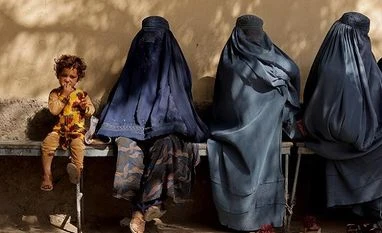
People in Afghanistan are today facing a food insecurity and malnutrition crisis of "unparalleled proportions", the UN Resident and Humanitarian Coordinator said on Tuesday.
 "Food insecurity threatens 'an entire generation' in Afghanistan")
WebinarsNew
Deep DiveNew
Explore Business Standard
People in Afghanistan are today facing a food insecurity and malnutrition crisis of "unparalleled proportions", the UN Resident and Humanitarian Coordinator said on Tuesday.
People in Afghanistan are today facing a food insecurity and malnutrition crisis of "unparalleled proportions", the UN Resident and Humanitarian Coordinator said on Tuesday.
Acute hunger in the country rose from 14 million in July, to 23 million in March, forcing households to resort to "desperate measures", said UN Deputy Special Representative Ramiz Alakbarov, in a statement.
"Unacceptable trade-offs have caused untold suffering, reduced the quality, quantity, and diversity of food available, led to high levels of wasting in children, and other harmful impacts on the physical and mental wellbeing of women, men, and children," he spelled out.
A staggering 95 per cent of Afghans are not getting enough to eat, with that number rising to almost 100 per cent in female-headed households, according to the UN Resident Coordinator, who is also deputy head of the UN assistance mission, UNAMA.
"It is a figure so high that it is almost inconceivable. Yet, devastatingly, it is the harsh reality," he said.
Alakbarov painted a picture of hospital wards filled with malnourished children, many weighing at age one what an infant of six months would weigh in a developed country, with some "so weak they are unable to move".
As Afghanistan continues to grapple with the effects of a terrible drought, the prospect of another bad harvest this year, a banking and financial crisis so severe that it has left more than 80 per cent of the population facing debt, and an increase in food and fuel prices, the UN official attested, "we cannot ignore the reality facing communities".
"Enormous challenges lie ahead," he said, reiterating that the UN and partners, are "doing everything we can" to alleviate the impacts of hunger and malnutrition, while giving communities the means to protect and sustain their livelihoods in the future.
So far this year, humanitarian partners have supported 8.2 million people with life-saving and life-sustaining food assistance, including emergency food rations, school meals, agricultural supplies and nutritious foods and supplements for nursing mothers and their infants, UN News reported.
Over the next months, the UN and its partners will continue to focus on scaling-up response activities, reaching previously underserved and remote areas that active conflict had rendered inaccessible.
Acute malnutrition rates in 28 out of 34 provinces are high with more than 3.5 million children in need of nutrition treatment support, said Dr Alakbarov.
He explained that since mid-August, over 2,500 nutrition treatment sites across all 34 provinces, both urban and rural, have been serving 800,000 acutely malnourished children, "and we plan to reach 3.2 million affected children this year".
"We also aim to reach one million people through vocational skills training, one million children through school feeding, and millions more people both directly and indirectly through programmes that will protect and boost the agricultural livelihoods upon which so much of the population depends," added the UN Representative.
(Only the headline and picture of this report may have been reworked by the Business Standard staff; the rest of the content is auto-generated from a syndicated feed.)
First Published: Mar 16 2022 | 9:25 AM IST

