Here's why automation of jobs is very bad news for millennial workers

Should governments respond by dissuading innovation?
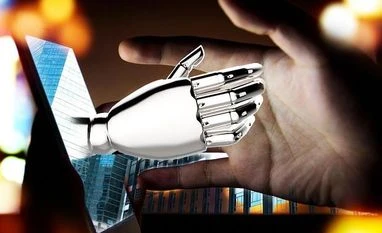
robots, artificial intelligence, AI, machine learning, technology
Photo: Shutterstock
Ferdinando Giugliano | Bloomberg
4 min read Last Updated : Jan 12 2020 | 12:56 AM IST
The rise of populist politicians across the rich world has led to a profound rethinking of the way developed economies work. In particular, the impact of automation on the labour market, and the disappearance of routine manufacturing jobs, has been blamed for the electoral successes of leaders such as US President Donald Trump and Italy’s Matteo Salvini.

Yet there are profound differences in what determines the economic winners and losers on the two sides of the Atlantic. In the US, the main factor deciding whether a worker can prosper in the age of robots appears to be education. Conversely, in the European Union, it seems to be whether staff have strong protection in their employment contracts — as many older industrial workers do here.

It would be foolish for any government to dissuade companies from investing in machines that are more productive. Innovation is a powerful driver of economic growth. However, they do need to make sure the impact of automation is spread evenly.

The American model of favouring the educated may be brutal, but at least it has a semblance of being meritocratic (if you ignore the skewing of colleges toward the rich). By contrast, the European tendency to protect staff with the best work contracts is unfair on the younger workers without those safeguards. That’s hardly the best way to deal with the problem of inter-generational injustice that drives some younger voters toward populist politicians on the left and right.

A study by Konstantinos Pouliakas for the European Centre for the Development of Vocational Training shows the extent to which automation is a challenge for Europe. Using a survey of nearly 50,000 individuals, he found that 14 per cent of adult workers may face a very high risk of automation. The occupations most in danger are routine jobs with little demand for transferable skills or social interaction.

As in the US, the middle-income part of the European labour market is being hollowed out. Maarten Goos, Alan Manning and Anna Salomons, three economists, looked at 16 European countries between 1993 and 2006. They found an increase in the employment share for high-paid professionals and managers as well as low-paid services workers, and a decrease in the share of manufacturing and routine office workers. This change is explained by the so-called “routinisation hypothesis,” which states simply that since computers can easily replace routine tasks, workers doing these jobs are most vulnerable.

Strangely, unlike in the US there’s little sign that automation is further polarising wages in Europe. The economists Paolo Naticchioni, Giuseppe Ragusa and Riccardo Massari looked at salaries on the continent for the period 1995-2007 and found technology has only a weak effect on their distribution. Their other interesting finding is that education plays no role in determining wage inequality in the EU, which isn’t the case for Americans.

However, there are clear losers from automation in Europe, as highlighted in a study of Germany by Wolfgang Dauth, an economist at the University of Wuerzburg, and his colleagues. Dauth finds that most of the burden falls on young workers just entering the manufacturing sectors. Europe’s labour market rigidity — expressed in employment protection for longer-serving staff — means companies have to give more stable and better-paid jobs to older incumbents, and thereby penalise new entrants. Younger workers have to switch plants or abandon manufacturing altogether, and face significant earning losses. 

Should governments respond by dissuading innovation? Not at all. The example of Italy shows that not having enough automation has a pernicious effect on the labour market. Gaetano Basso, a researcher at the Bank of Italy, found that since the mid-2000s, Italians haven’t suffered wage polarisation, but rather an outright degradation of the jobs market. Only the share of low-wage manual occupations has increased markedly, while high-wage jobs have dropped along with middle-income employment. 
 
The lack of automation is one cause. Italy’s economy has been marred by stagnant productivity for three decades, so it’s unsurprising that wages and job quality haven’t improved.

Rather than fighting innovation, governments must get better at handling its unwanted consequences. The most obvious area of improvement, on both sides of the Atlantic, is education — for younger and older workers. Promoting the right skills can help. However, Europe’s politicians also have to decide whether to keep the labour market skewed in favour of incumbent workers. If they do, the displaced youngsters of today will be the forgotten men and women of tomorrow. And the angriest voters.

One subscription. Two world-class reads.

Already subscribed? Log in

Subscribe to read the full story →
*Subscribe to Business Standard digital and get complimentary access to The New York Times

Smart Quarterly

₹900

3 Months

₹300/Month

SAVE 25%

Smart Essential

₹2,700

1 Year

₹225/Month

SAVE 46%
*Complimentary New York Times access for the 2nd year will be given after 12 months

Super Saver

₹3,900

2 Years

₹162/Month

Subscribe

Renews automatically, cancel anytime

Here’s what’s included in our digital subscription plans

Exclusive premium stories online

  • Over 30 premium stories daily, handpicked by our editors

Complimentary Access to The New York Times

  • News, Games, Cooking, Audio, Wirecutter & The Athletic

Business Standard Epaper

  • Digital replica of our daily newspaper — with options to read, save, and share

Curated Newsletters

  • Insights on markets, finance, politics, tech, and more delivered to your inbox

Market Analysis & Investment Insights

  • In-depth market analysis & insights with access to The Smart Investor

Archives

  • Repository of articles and publications dating back to 1997

Ad-free Reading

  • Uninterrupted reading experience with no advertisements

Seamless Access Across All Devices

  • Access Business Standard across devices — mobile, tablet, or PC, via web or app

Topics :Automationautomation at workmachine learningrobotsEuropean Unionmillenials

Next Story


