India seeks compensation for climate damages caused by rich nations

The 2015 Paris climate agreement included language to address "loss and damage," but it left questions about liability and redress unanswered
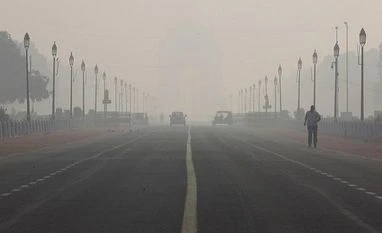
Climate change, pollution, new delhi
Photo: Bloomberg
Archana Chaudhary and Akshat Rathi | Bloomberg
4 min read Last Updated : Oct 23 2021 | 8:36 AM IST
India is seeking payment for the losses caused by climate disasters, its environment ministry said while laying out the country’s positions on critical issues that will be negotiated at the United Nations’ COP26 climate summit in the coming weeks.  
 
“Our ask is this: there should be a compensation for expenses incurred, and it should be borne by developed nations,” Rameshwar Prasad Gupta, the ministry’s senior-most civil servant, said on Friday. He added that India stands with other low-income and developing countries on the matter. 

Leaders and diplomats from across the globe are set to gather in Glasgow, Scotland, for the annual COP summit, which is seen as a make-or-break meeting to stave off the worsening effects of climate change. Compensation for climate disasters is expected to be a major sticking point at the talks, and the subject is something that India has already raised with U.S. climate envoy John Kerry, according to Gupta. Rich countries have added the majority of greenhouse gases causing the planet to warm above pre-industrial levels. 

The 2015 Paris climate agreement included language to address “loss and damage,” but it left questions about liability and redress unanswered. Discussions began as early as 2013 at a previous summit in Warsaw, but the technical details of how such money transfers occur still hasn’t been thrashed out.

The broad idea is that, based on historical contributions to global greenhouse gases, countries will provide compensation for the damages that pollution will one day cause. Countries that suffer climate impacts can then lay claim to money for repairs after a climate-fueled hurricane or flood. But not all disasters are caused by climate change, and scientists have only recently begun the hard work of being able to calculate how much a warmer planet contributed to an extreme weather event.


India is the world’s third-largest emitter on an annual basis today and among the top ten historical emitters, which means it too will have to contribute money into the pot. Even if India’s pay-in for damages were roughly 4%, the country would stand to get a larger pay-out for the losses it will incur, Gupta said. “If they want India to be a part, we may be willing,” he added.

Net Zero
 
The country is the only economy among the world’s 10 largest not to have set a goal to zero out its emissions. Even its neighbor China has one for 2060, slightly later than the 2050 target that the U.S., the U.K. and the EU are aiming for. Earlier this year, India considered setting a net-zero goal, but it has since backed out. Not all nations need to announce a net-zero target before Glasgow, according to environment minister Bhupender Yadav. 

“Climate finance hasn’t come in,” said Gupta. “For more ambitious climate goals, let there be more finance’’ first. 

This issue is set to be another talking point at the summit. Developed countries were supposed to provide $100 billion in climate finance to developing countries annually, starting in 2020. The money would be used for projects that reduce emissions and help countries adapt to warming. The latest figure stands at about $90 billion, and the hopes for the full commitment are dimming as the Glasgow conference approaches. 

As with past COP meetings, India’s delegation also plans to bring up the point of fairness. The country’s annual per capita emissions stand at about two tons of carbon dioxide, compared to more than 16 tons for the U.S. and less than half of the global per capita average. 

The recent energy crunch — marked by soaring natural gas prices — has also given India ammunition to continue using coal, the only fossil fuel which it has in abundance. That’s going to be a problem for the U.K.,  the host country, with COP26 President Alok Sharma having said that the Glasgow talks could “consign coal to history.”

India Prime Minister Narendra Modi has confirmed that he will join the COP26 summit along with 120 other heads of state. The conference runs from Oct. 31-Nov. 12. 
 

One subscription. Two world-class reads.

Already subscribed? Log in

Subscribe to read the full story →
*Subscribe to Business Standard digital and get complimentary access to The New York Times

Smart Quarterly

₹900

3 Months

₹300/Month

SAVE 25%

Smart Essential

₹2,700

1 Year

₹225/Month

SAVE 46%
*Complimentary New York Times access for the 2nd year will be given after 12 months

Super Saver

₹3,900

2 Years

₹162/Month

Subscribe

Renews automatically, cancel anytime

Here’s what’s included in our digital subscription plans

Exclusive premium stories online

  • Over 30 premium stories daily, handpicked by our editors

Complimentary Access to The New York Times

  • News, Games, Cooking, Audio, Wirecutter & The Athletic

Business Standard Epaper

  • Digital replica of our daily newspaper — with options to read, save, and share

Curated Newsletters

  • Insights on markets, finance, politics, tech, and more delivered to your inbox

Market Analysis & Investment Insights

  • In-depth market analysis & insights with access to The Smart Investor

Archives

  • Repository of articles and publications dating back to 1997

Ad-free Reading

  • Uninterrupted reading experience with no advertisements

Seamless Access Across All Devices

  • Access Business Standard across devices — mobile, tablet, or PC, via web or app

Topics :Climate ChangeUnited NationsDeveloped nations

Next Story



