Inside the world of Montblanc and its famous fountain pens

Montblanc's history goes back to, roughly, the beginning of the history of the modern fountain pen itself
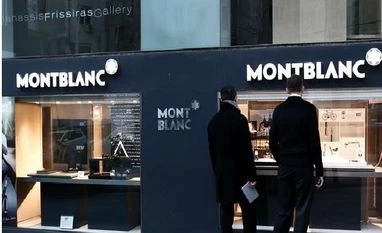
Montblanc
Montblanc (Photo: Reuters)
Jack Forster | Bloomberg
Last Updated : Apr 07 2018 | 9:45 PM IST
The notion of Montblanc as a watch manufacturer has now been around long enough that most of us have gotten used to the idea — I think, on that issue, that there are always going to be those who object on philosophical grounds, but there are some hearts and minds you're never going to win no matter how hard you try. The fact remains, however, that Montblanc has indeed been primarily a maker of writing instruments for most of its history, and that aspect of the company is one that most of us who know Montblanc as a watch manufacturer, may not know as well. 

My first Montblanc was a grad school graduation gift from my wife — a Meisterstück 149, which is as iconic a pen in the world of writing instruments, as, say, the Royal Oak or Submariner are in the world of watches or a 911 in the automotive realm. The only time it's been out of sight is when I was careless enough to drop it, uncapped, a meter and a half onto asphalt; it landed point down, and the nib got badly bent. Montblanc's New York boutique sent it back to Hamburg for repair and I got it back in a week, working just fine, no charge (watch companies, take note). I suppose I ought to admit that at one point I had about sixty vintage and modern pens, which eventually struck me as excessive, and I de-acquisitioned most of them, but I still have the 149. After carrying it for most of my working life, it, and I, returned to its birthplace, in Hamburg, Germany, to visit the Montblanc nib-making factory as well as the Montblanc Museum.

Montblanc's history goes back to, roughly, the beginning of the history of the modern fountain pen itself. Fountain pens as they exist today, first started to appear towards the end of the 19th century and really began to take off in the early 20th; all fountain pens share certain basic characteristics. First, they all use water soluble, water based inks (you can ruin a fountain pen by filling it with the wrong ink). Second, they all have a reservoir for the ink, which can be the barrel of the pen itself, or a flexible rubber sac; nowadays the majority of fountain pens use disposable ink cartridges (which purist pen enthusiasts tend to look down on a bit). There have been, over the last century, a wide range of filling systems as well, including lever, piston, so-called "touch-down" and snorkel filling systems, and so on. Third, they all have a nib — this is the flexible metal tip, which has a tiny slit down its centreline. 

A fountain pen relies on capillary action to work — this is the tendency of liquids to flow through narrow spaces thanks to adhesion between the fluid, and the wall of the narrow space through which it flows. More expensive fountain pens have nibs made of 18k or 14k gold, and the point is generally tipped with a tiny ball made of an alloy of one of the platinum group metals (osmium, iridium, and ruthenium are all in the platinum group) otherwise the tip would wear away very quickly. 

There were precursors to the modern fountain pen that had certain elements of what we know as the fountain pen today, but it wasn't until the late 1880s that recognisably modern fountain pens began to appear. In the beginning, they were generally just simple tubes (usually made of vulcanised rubber) which could be filled with an eyedropper; by the turn of the century, however, the development of filling systems using pistons or inflatable rubber bladders had begun. Montblanc got its start when three German partners created the Simplizissiumus-Füllhalter pen company in 1906, which changed its name to Simplo Filler Pen Co. GMBH in 1907, at the same time it moved from Berlin to Hamburg. The company's first pen was the Rouge et Noir safety pen. Safety pens are so-called because they have a retractable nib; when the nib is telescoped into the barrel and the cap screwed down, the pen is sealed against leakage.

One subscription. Two world-class reads.

Already subscribed? Log in

Subscribe to read the full story →
*Subscribe to Business Standard digital and get complimentary access to The New York Times

Smart Quarterly

₹900

3 Months

₹300/Month

SAVE 25%

Smart Essential

₹2,700

1 Year

₹225/Month

SAVE 46%
*Complimentary New York Times access for the 2nd year will be given after 12 months

Super Saver

₹3,900

2 Years

₹162/Month

Subscribe

Renews automatically, cancel anytime

Here’s what’s included in our digital subscription plans

Exclusive premium stories online

  • Over 30 premium stories daily, handpicked by our editors

Complimentary Access to The New York Times

  • News, Games, Cooking, Audio, Wirecutter & The Athletic

Business Standard Epaper

  • Digital replica of our daily newspaper — with options to read, save, and share

Curated Newsletters

  • Insights on markets, finance, politics, tech, and more delivered to your inbox

Market Analysis & Investment Insights

  • In-depth market analysis & insights with access to The Smart Investor

Archives

  • Repository of articles and publications dating back to 1997

Ad-free Reading

  • Uninterrupted reading experience with no advertisements

Seamless Access Across All Devices

  • Access Business Standard across devices — mobile, tablet, or PC, via web or app

Next Story



