
Islamic State prepares for life after Mosul as Iraqi morale runs low
Iraqi government forces are closing in on the historic Grand Mosque in Mosul
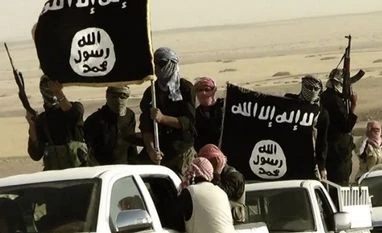 "Islamic State prepares for life after Mosul as Iraqi morale runs low")
premium
WebinarsNew
Deep DiveNew
Explore Business Standard
Iraqi government forces are closing in on the historic Grand Mosque in Mosul
Iraqi government forces are closing in on the historic Grand Mosque in Mosul, close to the heart of the old city, which remains in the grasp of Islamic State (IS). Iraqi helicopter gunships are in action, as are combat aircraft from coalition forces and the Iraqi Army hopes to gain control of the mosque imminently.
This would be a huge symbolic blow to IS. It was in the Grand Mosque that the group’s leader, Abu Bakr al-Baghdadi, announced the new “caliphate” in July 2014. He spoke at the first Friday prayers of Ramadan and it marked the start of the peak period of power for IS as it took control of much of north-western Iraq. Since then, though, the intense US-led air war has killed over 50,000 IS supporters, the expansion of the movement has stalled, and the Iraqi Army has retaken substantial territory.
So is the looming loss of the Grand Mosque the beginning of the end for IS – or is it just another turning point in a long drawn-out war?
The operation to retake Mosul started in October 2016. Iraqi forces and their allies stormed towards eastern Mosul so quickly that some predicted the whole of the city would be controlled by the Iraqi government by the year’s end. But the offensive soon met a stalemate, and it was three months before the Iraqi Army reached the banks of the Tigris, which divides eastern from western Mosul.
After a month’s pause, the assault began on the west of the city and its Grand Mosque. But by then, the elite Iraqi Counter Terror Service (or Golden Division) had sustained serious casualties and there were already fears that Mosul would turn out to be a pyrrhic victory, reducing the one force that the Iraqi government could depend on in any future civil war to a shadow of its former self.
As in eastern Mosul, progress was initially rapid but then descended to a bitter war of attrition, especially as Iraqi forces got closer to the densely packed old city. IS’s defensive forces are determined to maximise Iraqi military casualties; in one recent attack, IS used an armoured bulldozer to force its way through a road block before detonating a bomb. The Iraqis in turn are using air power and artillery much more readily, as happened in the new assault on the Grand Mosque, which has led to a sharp rise in civilian casualties.
Meanwhile, Iraqi and US government sources have offered different assessments of progress: while Iraq said that nearly 60% of western Mosul had been retaken, the US commander, General Joseph Martin, put it at “a little over a third”. But whatever the truth, the battle for western Mosul is repeating many of the features of the closing stages of the earlier battle for eastern Mosul, with heavy casualties among Iraq’s elite forces and even higher civilian casualties.
Down, but not out
IS is preparing for a rather different future. Just as it comes under intense pressure in Mosul, it is unexpectedly opening up new fronts in other parts of Iraq. There are reports of a surge in IS raids around Baiji and Tikrit, both well south of Mosul towards Baghdad. The Baiji police chief reported that until a few weeks ago, IS attacks were rare, but that there have been 40 in the last month alone.
Clearly the group is far from finished in Iraq. The indications are that it has already started the process of going underground, shifting from controlling territory to guerrilla warfare. It will be supported by many Sunnis who’ve seen the high number of civilian casualties caused by Iraqi government forces. The state is now highly dependent on Shia militias and Iranian Revolutionary Guard Corps units – both of whom Iraqi Sunnis view with great suspicion.
IS also recently made a show of its strength elsewhere. It claimed responsibility for an attack on a military hospital in Kabul, Afghanistan, which killed 30 people. Sardar Daud Khan’s Hospital is a major 400-bed Ministry of Defence facility in the diplomatic district of Kabul, close to the US embassy; that its tight security proved inadequate only added to the shock of the attack.
IS has also moved progressively to increase its capacity to stage attacks in the countries of the “far enemy”, one reason why UK authorities are warning once again that the risk of attacks is very high.
The group’s actions outside of Iraq and Syria serve three functions: straightforward retaliation for the group’s huge casualties in the air war; proof that the group is still a major force; and perhaps most worrying of all, aiming to stir up anti-Muslim hatred just as the far right gathers steam in Western Europe. Mosul may well be retaken in the coming weeks, but any suggestion that IS is finished is just plain nonsense.
Paul Rogers, Professor of Peace Studies, University of Bradford
This article was originally published on The Conversation. Read the original article.
Already subscribed? Log in
Subscribe to read the full story →

3 Months
₹300/Month
1 Year
₹225/Month
2 Years
₹162/Month
Renews automatically, cancel anytime

Premium stories handpicked daily by our editors


News, Games, Cooking, Audio, Wirecutter & The Athletic
Digital replica of our daily newspaper — with options to read, save, and share


Insights on markets, finance, politics, tech, and more delivered to your inbox
In-depth market analysis & insights with access to The Smart Investor


Repository of articles and publications dating back to 1997
Uninterrupted reading experience with no advertisements


Access Business Standard across devices — mobile, tablet, or PC, via web or app
First Published: Mar 22 2017 | 12:13 PM IST


 Connect with us on WhatsApp