Lanka rights abuse probe to be 'completely domestic': Sirisena
Rules out possibility of a special hybrid mechanism involving foreign judges
Press Trust of India Colombo Sri Lankan President Maithripala Sirisena has asserted that the judicial mechanism to probe the alleged rights abuses during the last phase of civil war with LTTE will be "completely domestic", ruling out the possibility of a special hybrid mechanism involving foreign judges.
"We need to move forward as a nation and ensure that this sort of situation (ethnic conflict) will not be repeated," Sirisena told reportes after his return from from New York where he attended the UN General Assembly session.
An all-party meet will be convened to seek the views of political parties, he said last night. "All political parties and all religious groups will be included in the discussion."
Sirisena stressed the mechanism to investigate the alleged rights violations and war crimes will be "completely domestic" and "in accordance with the Constitution."
He termed the new resolution -- co-sponsored by the US, Sri Lanka and some 38 other nations and adopted by consensus -- a triumph for his government.
Its essence was to make available "international help" in terms of expertise to ensure accountability.
"No more threats of war crimes investigations and our people being tried in international courts," Sirisena said.
"My government has improved our foreign relations. One of my first tasks as the President was to win back the goodwill of international community."
Sirisena's assertion came as the previous Mahinda Rajapaksa regime was seen as at odds with the international community over Sri Lanka's rights accountability.
The unity government of Sirisena and Prime Minister Ranil Wickremesinghe has been conciliatory in its approach since taking over.
The operative paragraph of the new resolution sets stage for the inclusion of "foreign experts" - without being prescriptive on international involvement.
This was in sharp contrast to UN High Commissioner for Human Rights Zeid Ra'ad Al Hussein's report which called for a hybrid court, integrating international judges, prosecutors, lawyers and investigators to probe the alleged rights abuses during the civil war that ended in 2009.
Sri Lanka has stuck to having a domestic mechanism despite Al Hussein's report. Tamil minorities and international rights groups, however, back UNHRC recommendations for an international inquiry.
Rights groups claim the Sri Lankan military killed nearly 40,000 civilians in the final months of the three decade-long brutal ethnic conflict.
Sri Lanka is averse to an international probe as it tends to cause displeasure among the Sinhala majority, who are opposed to military officials being tried for war crimes in combating the separatists Liberation Tigers of Tamil Eelam.

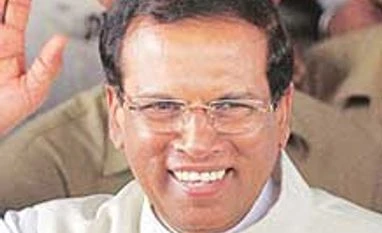 "Lanka rights abuse probe to be 'completely domestic': Sirisena")


 Connect with us on WhatsApp