
Major traders see oil staying above $70/ barrel, $100 not impossible
Oil prices crashed in April last year when the Covid-19 movement restrictions hit their peak with the U.S. crude benchmark turning negative for the first time.
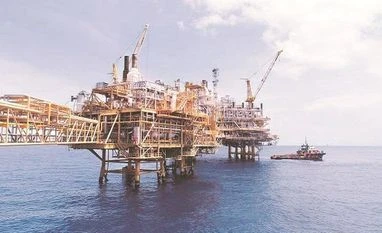 "Major traders see oil staying above $70/ barrel, $100 not impossible")
WebinarsNew
Deep DiveNew
Explore Business Standard
Oil prices crashed in April last year when the Covid-19 movement restrictions hit their peak with the U.S. crude benchmark turning negative for the first time.
By Julia Payne and Bozorgmehr Sharafedin
LONDON (Reuters) - The world's biggest oil traders said on Tuesday they see oil prices staying above $70 a barrel with demand expected to return to pre-pandemic levels in the second half of 2022.
Oil prices crashed in April last year when the COVID-19 movement restrictions hit their peak with the U.S. crude benchmark turning negative for the first time.
In a stark reversal, the traders do not discount a return to $100 per barrel oil further ahead.
Vitol Chief Executive Russell Hardy sees the oil moving between $70 and $80 a barrel for the remainder of 2021 on the expectation that the Organization of the Petroleum Exporting Countries and its allies (OPEC+) keep supply discipline, even as Iran's exports may resume if the United States rejoins a nuclear agreement with Tehran.
"Iranian production is probably going to come back at some time during the September to November period. OPEC wants to manage their situation to allow that to happen relatively smoothly...supportive of prices," Hardy told the FT Commodities Global Summit.
On Tuesday, Brent oil futures hit $74, the highest for the global benchmark since April 2019. [O/R]
"We're forecasting oil demand to come back to pre-COVID levels by Q3 or Q4 in 2022," Alex Sanna, Glencore's head of oil, told the conference.
"We have ample (spare capacity) at the front end, having said that if the Iranian deal doesn't happen and inflationary pressures continue to come, I see flat prices moving up from here."
Trading firms cashed-in last year on storage plays as oil rebounded but these are now mostly drawn down.
Mercuria expects oil demand to be mostly back by the year end at just over 100 million barrels per day (bpd), just shy of pre-COVID levels.
"Inventories are back to pre-COVID levels except for China, that still has a buffer...roughly 150 million barrels," said Marco Dunand, CEO of Mercuria Energy Trading.
With vaccinations under way and COVID-19 lockdowns easing, investors now weigh a triumverate of factors - Iran, underinvestment and the wild card of new climate change policies.
Investments to replace depleting oilfields and develop new ones has fallen dramatically in part due to the COVID-19 economic slump as well as the energy transition.
"The supply situation is quite concerning. We've gone from 15 years of reserves to 10 years," Trafigura CEO Jeremy Weir said.
While sky-high oil prices could return, they are not part of a much-hyped commodities super cycle, which the traders see as metals-centric led by the requirements expand power infrastructure to keep step with the energy transition.
"Can oil return to over $100 a barrel? Of course it could," Gunvor CEO Torbjorn Tornqvist said.
"There's a risk that supplies of hydrocarbons goes down faster than the alternatives are able to make up for. That's the real danger."
(Reporting by Julia Payne and Bozorgmehr Sharafedin; Editing by Marguerita Choy)
(Only the headline and picture of this report may have been reworked by the Business Standard staff; the rest of the content is auto-generated from a syndicated feed.)
First Published: Jun 16 2021 | 1:30 AM IST


 Connect with us on WhatsApp