MNCs change tack as Mondelez, Nestle and P&G face investor pressure

Go back to basics to focus on profitability, margins and shedding non-core assets
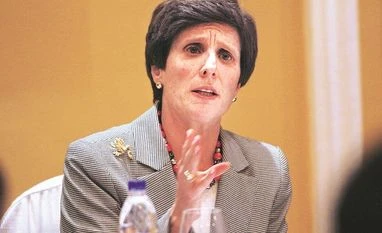
Irene Rosenfeld, Mondelez
Mondelez CEO Irene Rosenfeld
VIiveat Susan Pinto Mumbai
Last Updated : Aug 04 2017 | 1:48 AM IST
The international corporate world was in for a surprise on Wednesday when Mondelez’s long-standing chief executive officer (CEO), Irene Rosenfeld, announced she was stepping down from her position. 

Counted among the most powerful women CEOs in America, Rosenfeld’s exit came at a time when talk about a possible merger with Warren-Buffett-led Kraft-Heinz has been growing.

The new CEO, Dirk Van de Put, is expected to put a new blueprint in place as the maker of Cadbury chocolates and Oreo cookies struggles to grow across categories. Investor pressure to deliver shareholder value has been mounting on Mondelez for the last few quarters and Van de Put is expected to act quickly once he takes over this November. 

For the Indian unit of Mondelez, the country’s largest chocolate maker, this will mean having to buckle up for a new growth strategy, which includes launching brands and stepping into new categories, according to sector experts and analysts.

On Wednesday, Mondelez’s chief financial officer, Brian Gladden, said several emerging markets, including India, Vietnam, and Mexico, were stabilising and had an improving macro outlook. Van de Put is likely to capitalise on this momentum in India as it seeks growth outside of the US.

Mondelez, however, is not the only company to feel the heat of investor pressure in recent months. A clutch of majors from Unilever to RB (earlier Reckitt Benckiser), Nestlé, Procter & Gamble, and GlaxoSmithKline (GSK) are being pushed by activist investors to focus on profitability, shed non-core assets, bring down costs, merge with other companies, and even demerge into smaller units to drive shareholder value.

Most of them have resisted merging or demerging their units for now, such as GSK, which is under pressure to hive off its profitable consumer health care division or Unilever, which earlier this year thwarted an attempt by Kraft-Heinz to get a hold of its food business. 
Instead, these companies are going back to the basics — cutting costs, focusing on margins, and keeping their eyes fixed on their core businesses. In April, Unilever said it would combine two of its main business units, namely, food and refreshment, divest its spreads business, buy back shares worth 5 billion euros, raise dividends to 12 per cent, and target a 20 per cent operating margin by 2020, up from 16.4 per cent last year. 

In India, this has meant that Unilever’s subsidiary Hindustan Unilever has focused hard on cost management, improving year-on-year operating margins by 170-180 basis points in the three months ended June 2017, its highest in recent quarters.  In rival Procter & Gamble’s case, the company has moved from 16 to 10 product categories, paring its brand list to 65 in a year. From an India point of view, this has meant focus on segments such as detergents, shampoos, personal care, and male grooming categories, moving away from toothpastes, batteries, after-shave lotions, and air purifiers. 

The company has also in recent quarters de-focused its attention from low-end detergents and hair-care products, said Abneesh Roy, senior vice-president, research, institutional equities, Edelweiss. Nestlé, on the other hand, has focused its attention on new products in line with global strategy to reduce its dependence on Maggi. While Nestlé India’s June quarter profit growth came in at nearly 10 per cent, sales growth came in at 7.3 per cent, led by a spurt in sales by volumes of new products launched during the quarter.

Global pressure, local measures
  • Mondelez is likely to focus on new brands and product categories in India, as a new global CEO takes over 
  • Cost management is central to HUL in line with global strategy
  • P&G India is focusing its attention on core brands and product categories, moving away from non-core businesses
  • Nestlé is widening its product portfolio, introducing new products, as it reduces dependence on Maggi
  • RB (earlier Reckitt Benckiser) is putting a portfolio transformation in place globally, led by consumer health and hygiene 
  • GlaxoSmithKline, under pressure to hive off its consumer health care division, is trimming its drug portfolio


One subscription. Two world-class reads.

Already subscribed? Log in

Subscribe to read the full story →
*Subscribe to Business Standard digital and get complimentary access to The New York Times

Smart Quarterly

₹900

3 Months

₹300/Month

SAVE 25%

Smart Essential

₹2,700

1 Year

₹225/Month

SAVE 46%
*Complimentary New York Times access for the 2nd year will be given after 12 months

Super Saver

₹3,900

2 Years

₹162/Month

Subscribe

Renews automatically, cancel anytime

Here’s what’s included in our digital subscription plans

Exclusive premium stories online

  • Over 30 premium stories daily, handpicked by our editors

Complimentary Access to The New York Times

  • News, Games, Cooking, Audio, Wirecutter & The Athletic

Business Standard Epaper

  • Digital replica of our daily newspaper — with options to read, save, and share

Curated Newsletters

  • Insights on markets, finance, politics, tech, and more delivered to your inbox

Market Analysis & Investment Insights

  • In-depth market analysis & insights with access to The Smart Investor

Archives

  • Repository of articles and publications dating back to 1997

Ad-free Reading

  • Uninterrupted reading experience with no advertisements

Seamless Access Across All Devices

  • Access Business Standard across devices — mobile, tablet, or PC, via web or app

Next Story


