Food group Nestle missed forecasts, with a 4.2 per cent rise in annual underlying sales and predicted only a similar outcome this year, saying it was getting harder to raise prices in a tough economic environment.
It was the third successive year that the maker of Nescafe coffee and Kitkat bars fell short of its long-term target of five-six per cent growth, disappointing investors who still look to the Swiss giant to outperform rivals thanks to its broad reach and efficient management. "It was a generally disappointing report, nothing better than average," said Bernstein analysts in a note. "We are not accustomed to Nestle being 'average' but it is becoming more frequent."
Analysts had been expecting full-year sales growth of 4.3 per cent, according to a Reuters poll. Nestle shares were down three per cent at 71.90 Swiss francs at 1140 GMT.
All consumer goods companies are facing slower growth around the world and more demanding consumers in emerging markets, notably China. Rival Unilever last month also warned of a difficult year ahead, forecasting sales growth of three to five per cent. When asked whether the company was abandoning its long-term growth model entirely, Nestle Chief Executive Paul Bulcke said: "No, but we have a sense of reality."
Nestle also has its own specific problems, including last year's recall of its Maggi noodles in India that will make this year's first-quarter particularly tough and growth soft, according to Chief Financial Officer Francois-Xavier Roger.
"The delivery of our growth in 2016 might be slightly more uneven, from quarter to quarter, than you are used to," Roger said.
He added it would be even harder this year to raise prices due to overall deflation in markets like Japan and Europe, and some competitors taking advantage of lower costs of commodities like milk to steal market share with lower prices.
"We're not in that pricing game, but we cannot leave too much of a difference between our price point and their price point," Roger said.
Nestle did forecast improvements in margins, underlying earnings per share in constant currencies, and capital efficiency.
Its net profit fell more than expected last year, by over a third, to 9.1 billion Swiss francs ($9.2 billion), partly due to a one-off gain in 2014.
Nestle raised its dividend as expected to 2.25 francs per share, but did not propose a new share buyback programme, as some analysts had hoped.
Kepler Cheuvreux analyst Jon Cox said the disappointing outlook and absence of a share buyback announcement, would weigh on the stock.
"Its comment that pricing will be even softer in 2016 versus 2015 will send a chill through the whole space today and stock is going to take a smack," he said in a note.

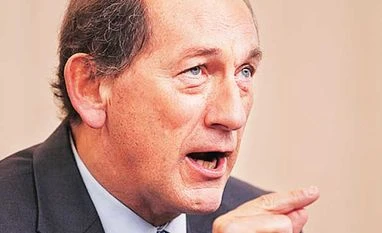 "Nestle posts 4.2% sales growth in 2015")


 Connect with us on WhatsApp