
New Zealand tops social progress index, India lags at 102nd spot
The index ranks countries by social and environmental performance rather than economic output
 "New Zealand tops social progress index, India lags at 102nd spot")
Explore Business Standard
The index ranks countries by social and environmental performance rather than economic output
The Social Progress Index (SPI) rates 132 countries on more than 50 indicators, including health, sanitation, shelter, personal safety, access to information, sustainability, tolerance and inclusion and access to education.
The SPI asks questions such as whether a country can satisfy its people's basic needs and whether it has the infrastructure and capacity to allow its citizens to improve the quality of their lives and reach their full potential.
"The index shows that economic growth does not automatically lead to social progress," Michael Green, executive director of the Social Progress Imperative, a non-profit organisation that publishes the index, told Thomson Reuters Foundation.
"If we are to tackle problems such as poverty and inequality, it shows that measuring economic growth alone is not enough."
New Zealand received high scores for personal rights and freedom, internet access and school enrolment. It was followed in the Top 10 by Switzerland, Iceland, Netherlands, Norway, Sweden, Canada, Finland, Denmark and Australia.
Some of the world's largest economies did not fare so well, with Germany in 12th place, the United Kingdom in 13th, Japan 14th, the United States 16th and France 20th. All of them except Germany scored poorly on environmental sustainability.
The United States also ranked poorly on health and wellness - despite being a top spender on healthcare - and on access to basic knowledge, with just 92% of children in school.
France lagged Slovenia (18th) and Estonia (19th) and had low scores on sustainability and opportunity, especially tolerance and inclusion. Italy was in 29th place, hurt by poor access to advanced education, sustainability and tolerance and inclusion.
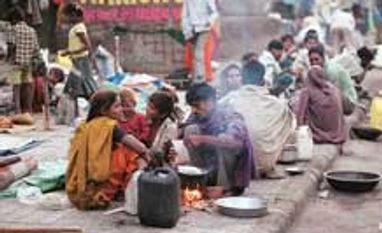
The low rankings of China (90th) and India (102nd) showed that their rapid economic growth is not yet being converted into better lives for their citizens, said Green.
Chad ranked last, below Central African Republic, Burundi, Guinea, Sudan, Angola, Niger, Yemen, Pakistan and Nigeria.
MEASURING BEYOND GDP
Even though economic growth and social progress are correlated, especially for poorer countries, the connection is far from automatic, said Harvard Business School professor Michael Porter, one of the index's backers.
"The SPI finds that all economic growth is not equal," he said in a press statement.
Costa Rica and South Africa, for example, have similar levels of gross domestic product (GDP), the most commonly used indicator for economic performance. But the central American nation achieves much greater social progress than South Africa thanks to progressive environmental and healthcare policies.
Social upheavals around the world prompted by citizens' frustration over a lack of opportunities and inequality are also a sign that economic performance alone is not an adequate measure of progress, said Green.
A 2014 survey by Deloitte found that the majority of the almost 7,800 millennials (people born in the 1980s and 1990s) it had surveyed in 28 countries prioritised education, health care, employment and protection from crime above improving their financial situation. They also believe social progress lies not just with governments but also with businesses.
"GDP doesn't necessarily tell you what to do whereas the SPI does give indications where you need to focus attention to make progress," Steve Almond, global chairman of Deloitte, which supports the SPI financially, told Thomson Reuters Foundation.
First Published: Apr 03 2014 | 6:50 AM IST

