Samsung Electronics Co's first-quarter profit benefited from the early release of its newest smartphones, yet left investors wondering whether the industry is running out of steam as it seeks a new hit product.
Samsung priced the Galaxy S7 below its predecessor and also fixed criticisms of the earlier model to capture customers between new product releases by Apple Inc. That helped the South Korean company withstand the impact of a global smartphone slowdown that hit prices at its semiconductor and display businesses.
Still, there's growing concern that Samsung, Apple and the rest of the industry will struggle to come up with a new must-have product that will entice consumers to replace their devices, which have become the nexus of peoples' digital lives. Global smartphone shipments fell 3 per cent in the first three months of the year, marking their first-ever decline, according to Strategy Analytics.
"The lingering market question about what could replace smartphones has not been fully addressed," said Lee Seung Woo, an analyst at IBK Securities Co. "All technology gurus, from Apple to Qualcomm, are struggling now but Samsung fared better in the first quarter, partly helped by weaker local currency, but I don't think that positive impact will remain intact in the quarters ahead."
Net income, excluding minority interests, rose to 5.26 trillion won ($4.6 billion) in the three months ended March, the Suwon, South Korea-based company said in a filing Thursday. That compares with the 4.42 trillion-won average of estimates compiled by Bloomberg. Samsung also said it will buy back 2.03 trillion won worth of common and preferred shares.
"Moving up the S7 release date to March, about a month earlier than the predecessor, even at a lower price was a good strategy for Samsung," Dohoon Lee, an analyst at CIMB Securities, said in Seoul before the earnings release.
Samsung's sales rose 5.6 per cent to 49.8 trillion won during the period, compared with estimates for 48.8 trillion won. The weaker Korean won against major currencies in the first quarter positively impacted operating profit by approximately 400 billion won, reflected mainly in the component business, Samsung said.
Shares of Samsung fell 2.7 per cent to 1.27 million won at the close on Thursday. The stock is mostly unchanged this year following three straight annual declines.
"The market is still wondering what will be the next growth driver for Samsung and what its life would be like after smartphones," Lee said.
Operating profit at the mobile unit rose to 3.89 trillion won from 2.74 trillion won a year earlier. The revival of demand for the top-end model was also accompanied by strong growth in its cheaper line-ups, such as J series, said Neil Shah, research director at Counterpoint Research.
"Compared to the Galaxy S6 series performance last year, the S7 series is showing as much as 50 per cent higher sales during its opening month of sales in some markets," Counterpoint said in an April 7 report.
For the second quarter, Samsung said it anticipates solid performance, driven by steady earnings in the mobile and chip businesses plus improvement of the home appliance and display divisions. Looking ahead to the rest of 2016, the company expects the mobile, home appliance, and TV businesses to continue to generate higher earnings while focusing on stabilizing the component business in the second half.
"If sales growth maintained at this rate, the S7 sales will show a clear distinction compared to its predecessors," Lee Kyeong-Tae, vice president of Samsung's mobile business, said on a conference call.
"We also introduced new mid-range models in the first quarter and the A series is selling particularly well in Europe and China, while J series is selling also well in emerging countries."
Operating income at the chip unit was 2.63 trillion won, compared with 2.93 trillion won a year earlier as the slackening demand pressured component prices, including semiconductors and displays.
For Related Story See: Samsung Biologics Plans for IPO on Korean Exchange This Year
The operating loss from displays was 270 billion won, compared with a profit of 520 billion won a year earlier, amid persistent price declines of liquid crystal displays.
The unit, the market leader of screens using organic light-emitting diodes for smaller devices, is in exclusive talks with Apple to supply screens for iPhone models scheduled for release next year, according to people familiar with the matter. The annual plan for capital expenditure has not yet been confirmed but is projected to increase slightly compared to last year's based on various business opportunities. Display panel spending may increase this year as the company sees strong market demand for OLED panels, it said.
"We expect demand for OLEDs will continue to grow in the smartphone market and if deemed necessary, we will execute further investment on right time," said Lee Chang-Hoon, vice president of Samsung Display.
Operating profit at the consumer-electronics division, which comprises TV and home appliance businesses, was 510 billion won in the quarter, reversing a loss of 140 billion won a year earlier, largely driven by higher profit from television sales amid falling panel prices.

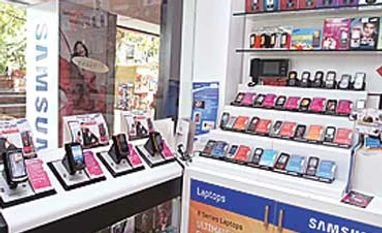 "Samsung profit beats estimates as early S7 release pays off")


 Connect with us on WhatsApp