Saudi-Iran proxy conflict to the fore as Lebanese PM quits

The resignation raises the prospect of a renewed political confrontation between Iran and Saudi Arabia in Lebanon
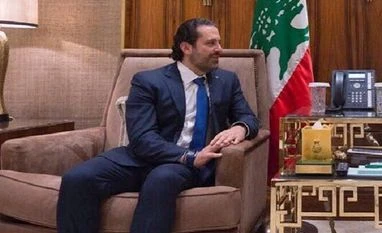
Saad Hariri
Lebanese Prime Minister Saad Hariri. Photo: Saad Hariri Twitter account
Vivian Nereim, Donna Abu-Nasr & Dana Khraiche | Bloomberg
Last Updated : Nov 05 2017 | 2:27 AM IST
Lebanese Prime Minister Saad al-Hariri unexpectedly resigned on Saturday in a televised speech from Saudi Arabia, saying he feared for his life and accusing Iran and its proxies of destabilising his country and the region.

Hariri, a pro-Saudi Sunni politician, said Lebanon has suffered enough because of the Iranian-backed Hezbollah and its grip on politics. “I want to say to Iran and its followers that they are losing in their interference in the affairs of Arab nations, and our nation will rise as it did before — and the hands that are extended to it with evil will be cut off,” he said.

The resignation raises the prospect of a renewed political confrontation between Iran and Saudi Arabia in Lebanon at a time when the Islamic Republic and its allies are widely seen to have won the proxy war against Sunni powers in neighbouring Syria. Saudi Arabia and Iran are on opposite ends of other regional conflicts such as Yemen and Iraq.

The Lebanese government includes Hezbollah members, and Hariri’s decision aims to weaken the group’s legitimate representation in domestic politics, said Sami Nader, head of the Beirut-based Levant Institute for Strategic Affairs. “It’s part of an all-out Saudi confrontation with Iran,” he said.

Riad Kahwaji, head of the Dubai-based Institute for Near East and Gulf Military Analysis, said the decision also shows that Saudi Arabia will not accept the current political structure in Lebanon, where a pro-Hezbollah president is tilting the balance of power in favour of the militant group.

In the speech, the outgoing premier expressed fears that he could be assassinated like his father, former prime minister Rafiq al-Hariri, who was killed in an explosion in 2005.

Hariri inherited his father’s political influence. He served as prime minister from 2009 to 2011 and took office again in 2016.

One subscription. Two world-class reads.

Already subscribed? Log in

Subscribe to read the full story →
*Subscribe to Business Standard digital and get complimentary access to The New York Times

Smart Quarterly

₹900

3 Months

₹300/Month

SAVE 25%

Smart Essential

₹2,700

1 Year

₹225/Month

SAVE 46%
*Complimentary New York Times access for the 2nd year will be given after 12 months

Super Saver

₹3,900

2 Years

₹162/Month

Subscribe

Renews automatically, cancel anytime

Here’s what’s included in our digital subscription plans

Exclusive premium stories online

  • Over 30 premium stories daily, handpicked by our editors

Complimentary Access to The New York Times

  • News, Games, Cooking, Audio, Wirecutter & The Athletic

Business Standard Epaper

  • Digital replica of our daily newspaper — with options to read, save, and share

Curated Newsletters

  • Insights on markets, finance, politics, tech, and more delivered to your inbox

Market Analysis & Investment Insights

  • In-depth market analysis & insights with access to The Smart Investor

Archives

  • Repository of articles and publications dating back to 1997

Ad-free Reading

  • Uninterrupted reading experience with no advertisements

Seamless Access Across All Devices

  • Access Business Standard across devices — mobile, tablet, or PC, via web or app

Next Story



