
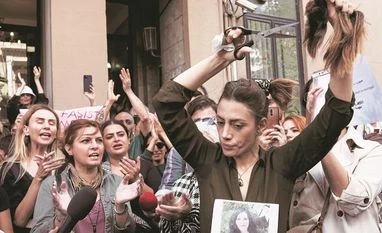
Several Iranian protesters rally to mark 40 days since Mahsa Amini's death
Hundreds of protesters poured into the streets of a northwestern Iranian city to mark the watershed 40 days since the death in custody of 22-year-old Mahsa Amini
 "Several Iranian protesters rally to mark 40 days since Mahsa Amini's death")
WebinarsNew
Deep DiveNew
Explore Business Standard
Hundreds of protesters poured into the streets of a northwestern Iranian city to mark the watershed 40 days since the death in custody of 22-year-old Mahsa Amini
Hundreds of protesters poured into the streets of a northwestern Iranian city on Wednesday to mark the watershed 40 days since the death in custody of 22-year-old Mahsa Amini, whose tragedy sparked Iran's biggest antigovernment movement in over a decade.
Deaths are commemorated in Shiite Islam as in many other traditions again 40 days later, typically with an outpouring of grief.
In Amini's Kurdish hometown of Saqez, the birthplace of the nationwide unrest now roiling Iran, crowds snaked through the local cemetery and thronged her grave.
Death to the dictator!" protesters cried.
State-run media announced that schools and universities in Iran's northwestern region would close, purportedly to curb "the spread of influenza".
In downtown Tehran, shops were shuttered and riot police were out in force.
A group of schoolgirls marched through the streets, shouting against the government as cars stuck in traffic honked their support, witnesses said. Antigovernment chants also echoed from the University of Tehran campus.
Amini, detained for allegedly violating the country's strict dress code for women, remains the potent symbol of protests that have posed one of the most serious challenges to the Islamic Republic.
With the slogan #WomanLifeFreedom, the demonstrations first focused on women's rights and the state-mandated hijab, or headscarf for women. But they quickly evolved into calls to oust the Shiite clerics that have ruled Iran since the 1979 Islamic Revolution.
The protests have also galvanised university students, labour unions, prisoners and ethnic minorities like the Kurds along Iran's border with Iraq.
Since the protests erupted, security forces have fired live ammunition and tear gas to disperse demonstrations, killing over 200 people, according to rights groups.
Untold numbers have been arrested, with estimates in the thousands. Iranian judicial officials announced this week they would bring over 600 people to trial over their role in the protests, including 315 in Tehran, 201 in the neighbouring Alborz province and 105 in the southwestern province of Khuzestan.
Tehran prosecutor Ali Salehi told the state-run IRNA news agency that four protesters were charged with war against God" which is punishable by death in Iran.
Iranian officials have blamed the protests on foreign interference, without offering evidence.
(Only the headline and picture of this report may have been reworked by the Business Standard staff; the rest of the content is auto-generated from a syndicated feed.)
First Published: Oct 26 2022 | 5:48 PM IST


 Connect with us on WhatsApp