SoftBank profit beats estimates

The billionaire is in the process creating the $100-billion SoftBank Vision Fund
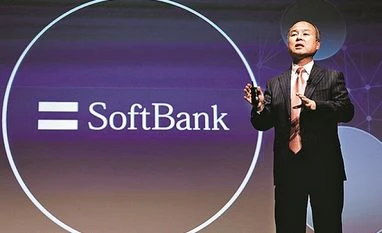
Softbank, Masayoshi Son
SoftBank’s founder Masayoshi Son is in the process of creating a $100-billion SoftBank Vision Fund. Photo: Reuters
Bloomberg | Pavel Alpeyev
Last Updated : Aug 08 2017 | 1:28 AM IST
SoftBank Group’s earnings are starting to reflect its transition into a company that invests and makes deals.

Operating profit was 479.3 billion yen ($4.3 billion), topping analysts’ projections, in the fiscal quarter ended June, as US unit Sprint returned to profit for the first time in three years. Sales came in at 2.19 trillion yen, matching predictions, the Tokyo-based company said in a statement on Monday.

SoftBank’s founder Masayoshi Son has long relied on earnings from Japanese wireless and telecom operations, using the money to make acquisitions and investments. The billionaire is in the process creating the $100-billion SoftBank Vision Fund, which was included in the results for the first time, to speed up investments in technology startups abroad. And the deal making is set to continue, with Sprint said to be back in merger talks with T-Mobile US.

“The issue is whether SoftBank is a conglomerate, or else an investment vehicle,” Pelham Smithers, whose London-based firm offers equity research on Asian technology companies, wrote in a note to clients. “This is likely to be the question which focuses the minds of both senior management and investors over the next few years.”

Underscoring the notion that SoftBank is becoming more of an investor, the Tokyo-based company reported losses on derivatives of 257 billion yen, which pushed net income to 5.5 billion yen, well below estimates. The loss was related to a financial arrangement a year ago to sell shares in Alibaba Group Holding through a trust in order to raise funds. Since then, Alibaba’s stock has climbed more than 80 per cent, forcing SoftBank to recognise the difference.

SoftBank’s shares have climbed 16 percent this year and closed at 9,023 yen on Monday. The Japanese wireless operator has a market value of about 9.9 trillion yen, while its public shareholdings are worth 17.1 trillion yen. Son has for years maintained that his company is undervalued, urging investors to see SoftBank as a “goose with more golden eggs in its belly.”

Source: Bloomberg
On Monday, Son also expressed interest in the US ride-hailing market, saying that he would be willing to invest in Uber Technologies Inc. or rival Lyft. The comments follow reports that SoftBank was looking to take a stake in Uber by buying shares from existing investors. Now, it’s clear the Japanese billionaire wants to push into the US market one way or another.

“We are interested in discussing with Uber, we are also interested in discussing with Lyft,” Son told analysts and reporters after an earnings announcement Monday. “We have not decided which way. But the US is a very big market. It’s the most important market, so we are definitely very much interested.”

SoftBank has already backed Uber’s competitors elsewhere, including China’s Didi Chuxing, India’s Ola and Grab in Southeast Asia.

Even as Sprint struggles to return to profit and stem subscriber losses, Son has set his sights on a possible merger with Charter Communications, the second-largest cable provider in the US Son has secured about $65 billion in financing for a possible offer for Charter, according to people familiar with the plan. At the same time, Sprint is said to have resumed preliminary merger discussions with T-Mobile US Inc. people with knowledge of the matter said. Last week, Sprint Chief Executive Officer Marcelo Claure said a decision on possible mergers is close at hand, lifting Sprint shares as much as 12 per cent.

“Sprint’s earnings are improving as planned and the company could conceivably go it alone,” Son said at an earnings briefing in Tokyo on Monday. “But, in order for the company to grow further, we are considering multiple consolidation options. The negotiations are proceeding apace and we should be able to arrive at a decision soon.”

Son has also kept busy in other areas, investing in businesses ranging from ride sharing, co-working and robotics to agriculture, cancer detection and autonomous driving in the past six months. At the company’s annual event for customers and suppliers last month, Son painted a picture of the future where satellite networks cover every inch of the Earth and a trillion devices connected to the internet disgorge data into the cloud to be analysed by artificial intelligence.

One subscription. Two world-class reads.

Already subscribed? Log in

Subscribe to read the full story →
*Subscribe to Business Standard digital and get complimentary access to The New York Times

Smart Quarterly

₹900

3 Months

₹300/Month

SAVE 25%

Smart Essential

₹2,700

1 Year

₹225/Month

SAVE 46%
*Complimentary New York Times access for the 2nd year will be given after 12 months

Super Saver

₹3,900

2 Years

₹162/Month

Subscribe

Renews automatically, cancel anytime

Here’s what’s included in our digital subscription plans

Exclusive premium stories online

  • Over 30 premium stories daily, handpicked by our editors

Complimentary Access to The New York Times

  • News, Games, Cooking, Audio, Wirecutter & The Athletic

Business Standard Epaper

  • Digital replica of our daily newspaper — with options to read, save, and share

Curated Newsletters

  • Insights on markets, finance, politics, tech, and more delivered to your inbox

Market Analysis & Investment Insights

  • In-depth market analysis & insights with access to The Smart Investor

Archives

  • Repository of articles and publications dating back to 1997

Ad-free Reading

  • Uninterrupted reading experience with no advertisements

Seamless Access Across All Devices

  • Access Business Standard across devices — mobile, tablet, or PC, via web or app

Next Story



