
South Korea set to normalise military intelligence sharing with Japan
South Korea's Defence Ministry initiated the process to normalise the General Security of Military Information Agreement
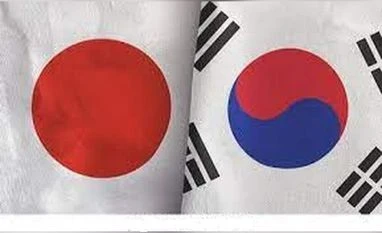 "South Korea set to normalise military intelligence sharing with Japan")
WebinarsNew
Deep DiveNew
Explore Business Standard
South Korea's Defence Ministry initiated the process to normalise the General Security of Military Information Agreement
South Korea's Defence Ministry initiated the process to normalise the General Security of Military Information Agreement, which is a military intelligence-sharing deal, after the mutual agreement between Seoul President Yoon Suk-Yeol and Japan's Prime Minister Fumio Kishida, Yonhap News Agency reported.
The defence ministry said it sent a letter to the country's foreign ministry asking for measures to normalise the GSOMIA deal.
The foreign ministry is soon expected to send an official letter to its Japanese counterpart in response, officials said.
Meanwhile, Japan's Defense Ministry on Friday welcomed the stable implementation of the pact, but the exact measures Seoul was seeking were unclear, The Japan Times reported.
This agreement came after Japan and South Korea leaders met and promised to rekindle ties in a fence-mending summit in Tokyo, reported CNN.
Japan's Prime Minister Fumio Kishida said, "From now on, I would like to open a new chapter in Japan-South Korea relations through frequent visits by both sides that are not tied down by formality." He made these remarks in Tokyo after meeting with South Korean President Yoon Suk Yeol on Thursday.
Leaders of South Korea and Japan haven't met in 12 years because of strained relations stemming from a wartime labour dispute, and other issues.
A report published in CNN stated that just hours prior to the trip, North Korea had launched its fourth intercontinental ballistic missile in less than a year, a long-range ballistic missile, into the waters off the east coast of the Korean Peninsula. This launch served as a stark reminder of the shared security challenges the two countries face.
In the joint statement on Thursday, Kishida said in response to North Korean nuclear and missile threats, Japan and South Korea had decided to resume bilateral security talks. They also reiterated the significance of the "free and open Indo-Pacific" and their commitment to cooperating to defend the global rules-based order.
Yoon also declared his support for "fully normalising" the military intelligence-sharing pact with Japan.
Yoon said, "I believe the two countries should be able to share information on North Korea's nuclear missile launches and trajectories and respond to them."
A long-running dispute about Japan's use of forced labour during its colonisation of Korea led South Korea to scrap its military intelligence-sharing deal with Japan in 2019, which brought their ties to their lowest point in decades.
(Only the headline and picture of this report may have been reworked by the Business Standard staff; the rest of the content is auto-generated from a syndicated feed.)
First Published: Mar 19 2023 | 8:42 AM IST


 Connect with us on WhatsApp