Sri Lanka must restructure $1 bn debt, needs stability: Outgoing finmin

With its foreign exchange reserves shrinking quickly, massive debt payments due and the rupee currency slumping, analysts say the government is running out of options
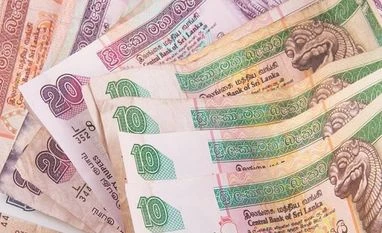
sri lanka
Reuters
4 min read Last Updated : Apr 07 2022 | 2:37 PM IST
Sri Lanka must look at restructuring a $1 billion sovereign debt due for payment in July, the outgoing finance minister told parliament on Thursday, urging an end to calls for a change in government amid the country's worst economic crisis in decades.

The opposition and some partners of the ruling coalition rejected calls this week for a unity government from President Gotabaya Rajapaksa after he disbanded his cabinet, in the hope of quelling weeks-long street protests over shortages of fuel, power, food and medicine.

With its foreign exchange reserves shrinking quickly, massive debt payments due and the rupee currency slumping, analysts say the government is running out of options.

"We must look at how to structure the $1 billion international sovereign bond payment maturing in July. We must go to the IMF, there is no other solution that I can see," said Ali Sabry, who sent his resignation to Rajapaksa on Tuesday, a day after he was moved to finance from the justice ministry.

It was not immediately clear if the president had accepted his resignation, which was submitted just days ahead of scheduled talks with the International Monetary Fund for emergency loans.

"We must have political stability to find solutions to the financial crisis," Sabry said.

"We must discuss with the World Bank and we must have a bridge-financing plan with the ADB. If we don’t have stability, who will conduct these talks?," he said, referring to the Philippines-based Asian Development Bank.

Opposition lawmakers, however, continued to call for the president to step down.

Critics have accused the government of mismanagement, but the economy has also been hit by drought and a sharp drop in tourism due to the COVID-19 pandemic.

Help from the IMF would also likely come with some tough political choices -- policy reforms that could add to the pain in the short-term in hopes of getting the economy back on more solid footing in a few years.

J.P. Morgan analysts estimated this week that Sri Lanka's gross debt servicing would amount to $7 billion this year, with the current account deficit coming in at around $3 billion. As of February, the country had only $2.31 billion in reserves.

Reuters reported on Wednesday that asset managers Blackrock Inc and Ashmore Group Plc were among the top holders of Sri Lanka's international bonds that form part of a creditor group as markets prepare for a potential debt restructuring - which would be a first for the island nation.

MONETARY POLICY

As the search for a replacement for Sabry continues, a new central bank governor was set to take over on Thursday in place of Ajith Nivard Cabraal, who quit on Monday.

P. Nandalal Weerasinghe, a former senior deputy governor of the Central Bank of Sri Lanka who has worked with the IMF, will hold a monetary policy meeting on Friday. It was originally supposed to be held on Monday.

An analyst said the central bank was expected to hike key interest rates by 300-400 basis points (bps) - following a 100 bps increase in early March - to tame inflation that hit 18.7% in March.

"We also expect the newly appointed governor to outline potential measures to be included in the IMF reform plan, views on potential debt restructuring, and currency management," said Lakshini Fernando of Asia Securities, adding she also expected Weerasinghe to address the need for "higher stability and transparency" at the bank.

Protests over shortages of food, fuel, and other essentials have gone unabated in the country of 22 million people. Little money is left to pay for imports.

The Sri Lanka rupee currency's 40% depreciation against the U.S. dollar in one month has compounded problems.
The stock market, which is down a third this year, fell about 4% on Thursday.

One subscription. Two world-class reads.

Already subscribed? Log in

Subscribe to read the full story →
*Subscribe to Business Standard digital and get complimentary access to The New York Times

Smart Quarterly

₹900

3 Months

₹300/Month

SAVE 25%

Smart Essential

₹2,700

1 Year

₹225/Month

SAVE 46%
*Complimentary New York Times access for the 2nd year will be given after 12 months

Super Saver

₹3,900

2 Years

₹162/Month

Subscribe

Renews automatically, cancel anytime

Here’s what’s included in our digital subscription plans

Exclusive premium stories online

  • Over 30 premium stories daily, handpicked by our editors

Complimentary Access to The New York Times

  • News, Games, Cooking, Audio, Wirecutter & The Athletic

Business Standard Epaper

  • Digital replica of our daily newspaper — with options to read, save, and share

Curated Newsletters

  • Insights on markets, finance, politics, tech, and more delivered to your inbox

Market Analysis & Investment Insights

  • In-depth market analysis & insights with access to The Smart Investor

Archives

  • Repository of articles and publications dating back to 1997

Ad-free Reading

  • Uninterrupted reading experience with no advertisements

Seamless Access Across All Devices

  • Access Business Standard across devices — mobile, tablet, or PC, via web or app

Topics :sri lankaAsian economyGlobal economy

Next Story



