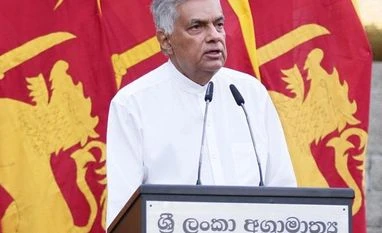
Sri Lanka PM proposes to make president, cabinet answerable to parliament

Sri Lanka has been rocked by protests due to an unprecedented financial crisis, which culminated in the resignation of former Prime Minister Mahinda Rajapaksa and his cabinet this month

Ranil Wickremesinghe
Ranil Wickremesinghe. Photo: Twitter @RW_UNP
Reuters Colombo
2 min read Last Updated : May 29 2022 | 10:30 PM IST
Sri Lankan Prime Minister Ranil Wickremesinghe said on Sunday his government was working to make the president and cabinet accountable to parliament, after weeks of street protests triggered by the country's worst economic crisis in decades.

Hit hard by the pandemic, rising oil prices and populist tax cuts, Sri Lanka faces rampant inflation and shortages of fuel and other essentials, prompting the resignation of former Prime Minister Mahinda Rajapaksa and his cabinet this month.

Wickremesinghe said his government has proposed enacting laws to give parliament more power, adding that over a dozen independent committees would be set up for parliamentary oversight and supervision of financial matters.

"According to the new system we have proposed, the president will be held accountable to the parliament. The cabinet of ministers is also accountable to parliament," Wickremesinghe said in a televised address.

The proposal could take several weeks to be approved, as it needs to be accepted by the cabinet and the Supreme Court, after which the parliament's approval will be sought.

President Gotabaya Rajapaksa and his brother, Mahinda, rolled back a series of electoral, police and financial reforms enacted by the previous government, months after assuming power with a two-thirds majority in 2020.

Opposition leaders had accused the Rajapaksa government of disproportionately increasing presidential powers and diluting the role of the parliament in lawmaking.
Wickremesinghe, who assumed office over two weeks ago, has indicated that inflation would rise as the government gets down to tackling the crisis, and that there could be more protests on the streets.

Critics say Wickremesinghe's proposed political reforms fall short of expectations and do not address the key demands of protesters including abolishing the executive powers of the presidency.

"The proposal before Cabinet is still giving a lot of power to the president. He will still be able to hold ministries, prorogue and dissolve parliament," said Bhavani Fonseka, senior researcher at Colombo-based Centre for Policy Alternatives.

"While it brings some power sharing, it is not enough," Fonseka said.

(Writing by Sudarshan Varadhan; Editing by Emelia Sithole-Matarise and Nick Macfie)

One subscription. Two world-class reads.

Already subscribed? Log in

Subscribe to read the full story →
*Subscribe to Business Standard digital and get complimentary access to The New York Times

Smart Quarterly

₹900

3 Months

₹300/Month

SAVE 25%

Smart Essential

₹2,700

1 Year

₹225/Month

SAVE 46%
*Complimentary New York Times access for the 2nd year will be given after 12 months

Super Saver

₹3,900

2 Years

₹162/Month

Subscribe

Renews automatically, cancel anytime

Here’s what’s included in our digital subscription plans

Exclusive premium stories online

  • Over 30 premium stories daily, handpicked by our editors

Complimentary Access to The New York Times

  • News, Games, Cooking, Audio, Wirecutter & The Athletic

Business Standard Epaper

  • Digital replica of our daily newspaper — with options to read, save, and share

Curated Newsletters

  • Insights on markets, finance, politics, tech, and more delivered to your inbox

Market Analysis & Investment Insights

  • In-depth market analysis & insights with access to The Smart Investor

Archives

  • Repository of articles and publications dating back to 1997

Ad-free Reading

  • Uninterrupted reading experience with no advertisements

Seamless Access Across All Devices

  • Access Business Standard across devices — mobile, tablet, or PC, via web or app

Topics :sri lankaRanil Wickremesinghe financial crisis

Next Story