The world's biggest shipping firm, AP Moller-Maersk, set a new course on Thursday that will see the $30-billion firm bulk up its transport business while seeking alliances or a separate listing for its energy operations.
Low freight rates and oversupply have rocked the container shipping sector, with South Korea's Hanjin Shipping Co Ltd forced into receivership last month, stranding an estimated $14 billion in cargo on its ships.
Maersk, with a fleet of more than 600 ships, will focus its attention on building up its transport and logistics operations despite these problems, while creating a separate energy division combining Maersk Oil and three related companies.
The latter will be split from the main company individually or in combination "in the form of joint-ventures, mergers or listing", within two years Maersk, which is controlled by the Maersk family and was founded in 1904 by AP Moller, said.
The spin-off should allow Maersk to shed any conglomerate discount by allowing markets to value each of its businesses.
Estimates for the sum of the parts vary, with Denmark's Sydbank saying the Transport and Logistics division could be worth $26-$35 billion and the Energy division possibly $11-$23 billion, while Barclays analysts say a standalone Maersk Oil would currently have a market value of around $4.7 billion.
"Separating our transport and logistics businesses and our oil and oil related businesses...will enable both to focus on their respective markets. Both face very different underlying fundamentals and competitive environments," Chairman Michael Pram Rasmussen said in a statement.
The shake-up will be led by Soren Skou, the 52-year-old chief executive of Maersk Line who became group CEO in June. He will lead the new Transport and Logistics division, while Maersk Drilling boss Claus V Hemmingsen will head the Energy unit. Shares in Maersk, which have risen by more than 20 per cent since June in anticipation of the strategic review, climbed 3.4 per cent on the news and were at 10,240 crowns at 1516 GMT. Some analysts and investor, however, said the 112-year-old company had not gone far enough.
"It might be one of the most pain-free solutions relative to other scenarios, but they could have gone even further," Nykredit analyst Ricky Rasmussen said, suggesting the group could have been cut into four units.
The weak shipping market has hit the top companies which have invested heavily in "mega-ships", largely to operate on the main Asia to Europe trade route, with industry analysts questioning whether there is enough work for them Otto Friedrichsen, equity strategist at Danish asset manager Formuepleje, with around 45 billion Danish crowns allocated in bonds and equities, has shunned the shipping industry including Maersk, and was sceptical about the split.
"I still want to see changes in the underlying markets and don't see this as creating any value here and now." Maersk's second-quarter group net profit of $101 million was well below the $196 million expected by analysts.
"We had a quite poor second quarter, but some players have it much worse than we do, which we also saw with Hanjin," Rasmussen told Reuters after the split was announced.
South Korea's Hanjin Shipping Co Ltd, the world's seventh largest container carrier, filed for court receivership in late August.
Rasmussen expects a recent wave of consolidation to intensify, and told Reuters that Maersk is ready to use its cash reserves of close to $12 billion to buy up competitors.
"The Chinese shipping companies are now uniting forces because they are under pressure. In the long run, no one finds it amusing to run a loss-making business," Rasmussen said.
Clustered with Maersk Line in the Transport and Logistics division will be APM Terminals, Damco, Svitzer and Maersk Container Industry, which together accounted for more than 75 per cent of the group's first-half revenue.
Maersk Oil and related firms such as Maersk Drilling have grappled with stubbornly low oil prices which remain 60 per cent below mid-2014 levels.
Grouping the two energy firms with Maersk Supply Service and Maersk Tankers was a positive first step toward exiting the sector, said analyst Morten Imsgard at Sydbank.
"It was as far as Maersk could go right now, because they could not have a ready-made solution for the energy division in these markets, if they also want to realise a decent price for the assets," he said.
"Maersk Oil...is a small player, so there are many players big enough to take (it) in. (Maersk) Drilling is relatively large, but its competitors are under extreme financial pressure, so it's less likely to find an sale opportunity there." Earlier banking sources told Reuters that Maersk was in talks to buy a portfolio of North Sea oil assets from Royal Dutch Shell as it considers scaling up the oil and gas business ahead of a spin-off.
SHIFTING THE FOCUS - The 112-year-old conglomerate will focus on its core transport and logistics businesses
- The spin-off should allow Maersk to shed any conglomerate discount by allowing markets to value each of its businesses
- They are to be separated from the main company either individually or in combination "in the form of joint ventures, mergers or listing"

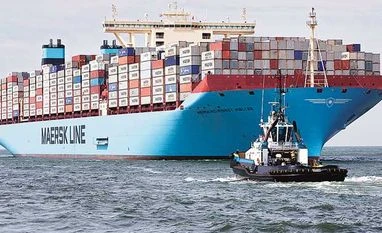 "Steering away from energy, Maersk to bulk up transport")


 Connect with us on WhatsApp