Struggling German meat industry threatened by tax-hike proposal

The German farmers' association says that an increase in tax would drive consumers to buy cheaper products imported from European countries with less-stringent animal welfare laws

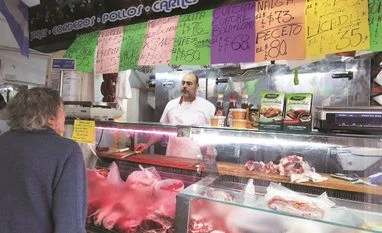
Representative image
Kristie Pladson | Bloomberg
4 min read Last Updated : Aug 11 2019 | 1:02 AM IST
Already grappling with waning domestic appetite for their products, German livestock farmers and meat producers were confronted this week with the specter of a hike in sales tax that could further crimp demand.

A national debate was triggered in the home of the Bratwurst when animal-rights activists urged lawmakers to raise the levy on meat products to 19 per cent, from the current discounted rate of 7 per cent, to fund improvements to the living conditions of livestock.

A poll for the Funke media group showed a majority of Germans, or 56.4 per cent, backed the measure, with more than a third calling it “very positive” and some 82 per cent of voters for the environmentalist Greens in favour.

Concern about animal welfare is increasing in Germany, along with a desire for healthier diets and climate-friendly, sustainable food production that could all have an impact on the meat industry. German meat output has already dropped 5.2 per cent over the last five years, with pork production slumping by 6.4 per cent, according to official data.

The German farmers’ association immediately pushed back against the tax hike proposal, arguing that an increase would drive consumers to buy cheaper products imported from European countries with less-stringent animal welfare laws.

Alois Gerig, chairman of the lower house of parliament’s food and agriculture committee and a member of Chancellor Angela Merkel’s Christian Democrats, poured cold water on the idea, saying Thursday that it would be consumers who foot the bill, not producers.

“I don’t think that’s the best way,” Gerig told DLF radio. “What’s more, the ruling coalition has agreed that we don’t want any tax increases.”

While demand at home may be waning, Europe’s pig farmers are currently benefitting from the hog crisis in Asia, as top pork consumer China and its neighbours suck in supplies from abroad. The African swine fever virus has ravaged Asian herds and caused millions of pigs to be culled. That has pushed prices in the European Union, which supplies more than half of China’s imports, to a five-year high.

Health concerns are one reason some Germans shy away from meat, but worries about the impact on the environment are also increasingly a factor and another challenge for the industry. They are helping foster an expanding menu of meat alternatives, with so-called “flexitarianism” -- a plant-based diet with the occasional inclusion of meat -- on the rise.

Catering to these changing tastes, German supermarkets have been quick to fill their shelves with soy riffs on traditional German dishes. In the year through June 2018, Germany was the global leader of vegan and vegetarian product launches, accounting for 15 per cent of new products launched worldwide, according to market research agency Mintel. Blocks of tofu now share shelf space with schnitzel, sausage, and sandwich meat made from soy.

“The vegan sector is one of the fastest-growing segments in the German food and drink industry,” Mintel analyst Katya Witham said by email. “Vegan products attract attention from a much wider, health and ethically driven, flexi-vegan consumer base.”

Raphael Moreau, a senior analyst at Euromonitor International, said the sale of meat alternatives is taking off again after the initial surge tailed off around 2017-end.

“That’s because there are new products coming and quality has improved,” Moreau said by phone. “So we’re seeing a second wave of interest and a lot of publicity.”

There are also demographic changes to consider. Official data shows that, as pork production fell over the last five years, output of lamb and mutton jumped 14.6 per cent. Germany is home to a growing Muslim population, which traditionally eschews pork in favour of sheep and goat.

One subscription. Two world-class reads.

Already subscribed? Log in

Subscribe to read the full story →
*Subscribe to Business Standard digital and get complimentary access to The New York Times

Smart Quarterly

₹900

3 Months

₹300/Month

SAVE 25%

Smart Essential

₹2,700

1 Year

₹225/Month

SAVE 46%
*Complimentary New York Times access for the 2nd year will be given after 12 months

Super Saver

₹3,900

2 Years

₹162/Month

Subscribe

Renews automatically, cancel anytime

Here’s what’s included in our digital subscription plans

Exclusive premium stories online

  • Over 30 premium stories daily, handpicked by our editors

Complimentary Access to The New York Times

  • News, Games, Cooking, Audio, Wirecutter & The Athletic

Business Standard Epaper

  • Digital replica of our daily newspaper — with options to read, save, and share

Curated Newsletters

  • Insights on markets, finance, politics, tech, and more delivered to your inbox

Market Analysis & Investment Insights

  • In-depth market analysis & insights with access to The Smart Investor

Archives

  • Repository of articles and publications dating back to 1997

Ad-free Reading

  • Uninterrupted reading experience with no advertisements

Seamless Access Across All Devices

  • Access Business Standard across devices — mobile, tablet, or PC, via web or app

Topics :Germanymeat

Next Story




