Superbacteria could soon be eating China's factory waste

The clean-up goes to the heart of an industry that leveraged decades of cheap labour and capital
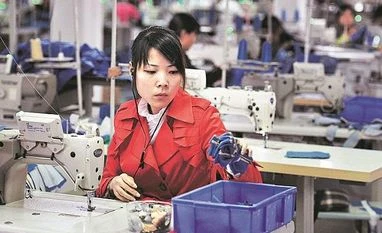
The superbacteria can clean up more efficiently the vast quantities of waste water the textile industry produces in China.
Bloomberg
Last Updated : Dec 14 2017 | 10:25 PM IST
In a Hong Kong laboratory, researchers are working with one of the world’s biggest cloth makers to improve its production process using a special ingredient: bacteria. 

TAL Apparel, which has factories in mainland China and Southeast Asia, has teamed up with City University to identify bacteria that can clean up more efficiently the vast quantities of waste water the textile industry produces. It’s one of hundreds of efforts by China’s private and state-owned companies to fix a problem that could end up rewriting the playbook of the global fashion industry. After decades of almost unbridled industrial growth that left China with a legacy of rampant pollution, shrinking aquifers and soaring water prices, the government is cracking down on big industrial users, and the textile industry is in the front line. Cloth-making ranks third in China for the amount of waste water it discharges — 3 billion tonnes a year — after chemicals and paper, according to a 2015 report by New York-based non-profit group Natural Resources Defense Council, which has an office in Beijing.

The price of ensuring a sustainable water supply in China is yet another expense for factories that are already being squeezed by higher land and labour costs. And while automation and overseas production offer some respite, China’s companies are turning to other technologies to preserve operating margins that, even for major players such as Crystal International Group, can be less than 10 percent. In 2015, the government released its Water Ten Plan, ushering in stricter waste-water regulations. It sets out 10 general measures to control pollution discharge, promote technology and strengthen water management, with a 2020 deadline to meet its goals. The stricter water rules are part of China’s actions to increase enforcement in environmental measures. Penalties for environmental violations by the country’s manufacturers rose 34 percent in 2015, from the previous year, according to China Water Risk, a Hong Kong-based non-profit organisation focusing on disclosing risks related to China’s water resources.

The clean-up goes to the heart of an industry that leveraged decades of cheap labour and capital, and a unique close-knit supply chain of cloth, dyeing, sewing, fasteners, trimmings, labels and logistics, to deliver so-called fast fashion — rapidly shifting style from the catwalk to the mass market at prices that make garments almost a disposable commodity.  “Customers are happy because clothes are even cheaper than a decade ago, and retailers can benefit from low costs,” said Felix Chung, a Hong Kong legislator representing the textile industry. “But the result is massive waste — and the brands will need to pay for it in the future.”

One subscription. Two world-class reads.

Already subscribed? Log in

Subscribe to read the full story →
*Subscribe to Business Standard digital and get complimentary access to The New York Times

Smart Quarterly

₹900

3 Months

₹300/Month

SAVE 25%

Smart Essential

₹2,700

1 Year

₹225/Month

SAVE 46%
*Complimentary New York Times access for the 2nd year will be given after 12 months

Super Saver

₹3,900

2 Years

₹162/Month

Subscribe

Renews automatically, cancel anytime

Here’s what’s included in our digital subscription plans

Exclusive premium stories online

  • Over 30 premium stories daily, handpicked by our editors

Complimentary Access to The New York Times

  • News, Games, Cooking, Audio, Wirecutter & The Athletic

Business Standard Epaper

  • Digital replica of our daily newspaper — with options to read, save, and share

Curated Newsletters

  • Insights on markets, finance, politics, tech, and more delivered to your inbox

Market Analysis & Investment Insights

  • In-depth market analysis & insights with access to The Smart Investor

Archives

  • Repository of articles and publications dating back to 1997

Ad-free Reading

  • Uninterrupted reading experience with no advertisements

Seamless Access Across All Devices

  • Access Business Standard across devices — mobile, tablet, or PC, via web or app

Next Story



