Taliban will be back in charge of Afghanistan. What next for the country?

In just a few weeks, the militant group has swept from province to province until it entered the capital, Kabul, earlier today.
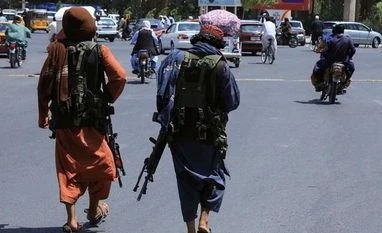
Taliban
Photo: Reuters
Rosalind Mathieson | Bloomberg
4 min read Last Updated : Aug 15 2021 | 6:10 PM IST
The Taliban takeover of Afghanistan is happening with dizzying speed.

In just a few weeks, the militant group has swept from province to province until it entered the capital, Kabul, earlier today.

Rather than push on militarily, it seems for now the Taliban are letting the government fall on its own.

All signs are that President Ashraf Ghani will agree to a power sharing arrangement. Which in effect means the Taliban will be back in charge — coming full circle 20 years after the Americans booted them out — and Ghani will either step down or move to a figurehead role, someone to give the Taliban a veneer of respectability with the rest of the world.

While the Taliban are issuing statements about ensuring “the transition process is completed safely and securely, without putting the lives, property and honor of anyone in danger,” the danger is their actions will be quite different.

Controlling the customs posts and border crossings (aside from Kabul airport) and with the Afghan military collapsing, the Taliban hold the cards. Russia and China will be comfortable engaging with the group’s leaders.

But already there are reports the militants are seeking to reimpose the fundamentalism that defined their earlier rule. Two decades of painful but hard won progress for women and civil society could vanish.

A concern for neighbors is that an exodus of refugees from Afghanistan could include terrorists, and Uyghur separatists. The Taliban might permit groups like al-Qaeda to train and operate from there.

Afghanistan presents US President Joe Biden with an unwinnable challenge. Americans wanted their soldiers home after so many years of fighting. And yet the US also says it stands as a defender of human rights.

Biden is unlikely to reverse course despite the growing criticism. “I was the fourth president to preside over an American troop presence in Afghanistan — two Republicans, two Democrats,” he says. “I would not, and will not, pass this war onto a fifth. — Rosalind Mathieson.

Evacuation scramble | Countries including the US, Australia, Canada and the UK are racing to fly out diplomatic staff, as well as Afghan interpreters and contractors. Biden has boosted the US troop deployment by about 1,000 from the 3,000 Marines and soldiers announced earlier and 1,000 troops already in Afghanistan, with reports of helicopters landing at the US embassy compound to ferry people to the airport.

Russia does not plan for now to evacuate its embassy. “The world is watching in horror the results of Washington’s latest historical experiment,” Foreign Ministry spokeswoman Maria Zakharova said in a Telegram post.

Cutting them off | A Republican lawmaker is calling on the Federal Reserve to ensure official assets held by Afghanistan in the US don’t fall into the hands of the Taliban. Representative Andy Barr made the request in a letter to the New York Fed, saying the goal is to ensure the country’s account at the Fed “cannot benefit the Taliban’s malign activities.”

Refugee risk | The Taliban’s advance has made the willingness of Turkey to take the lead in securing Kabul airport riskier as it struggles to seal its eastern border with Iran against those fleeing Afghanistan. Turkey already hosts the world’s largest refugee population and, as tens of thousands of Afghans follow in the footsteps of Syrians and Iraqis, its hospitality has gone cold. President Recep Tayyip Erdogan said last week he may meet leaders from the Taliban.

The background | The Taliban have a long history in Afghanistan. They first took over in 1996, and ruled until the US military ousted them in 2001. But America is not the only country to invade Afghanistan — Russia has, too. For more details, read this explainer.

Protecting women | In recent weeks, Taliban fighters in northern areas told some female employees of Afghanistan International Bank, the country’s largest by assets, to leave and go home, a source tells Eltaf Najafizada. “We can’t allow wholesale massacres of any woman who’s in the workplace in Afghanistan, or any woman who has an education, or allow them to kick all of the girls out of school and go back to, really, the days of cave people in the way they treat women and girls,” says US Senator Jeanne Shaheen.

One subscription. Two world-class reads.

Already subscribed? Log in

Subscribe to read the full story →
*Subscribe to Business Standard digital and get complimentary access to The New York Times

Smart Quarterly

₹900

3 Months

₹300/Month

SAVE 25%

Smart Essential

₹2,700

1 Year

₹225/Month

SAVE 46%
*Complimentary New York Times access for the 2nd year will be given after 12 months

Super Saver

₹3,900

2 Years

₹162/Month

Subscribe

Renews automatically, cancel anytime

Here’s what’s included in our digital subscription plans

Exclusive premium stories online

  • Over 30 premium stories daily, handpicked by our editors

Complimentary Access to The New York Times

  • News, Games, Cooking, Audio, Wirecutter & The Athletic

Business Standard Epaper

  • Digital replica of our daily newspaper — with options to read, save, and share

Curated Newsletters

  • Insights on markets, finance, politics, tech, and more delivered to your inbox

Market Analysis & Investment Insights

  • In-depth market analysis & insights with access to The Smart Investor

Archives

  • Repository of articles and publications dating back to 1997

Ad-free Reading

  • Uninterrupted reading experience with no advertisements

Seamless Access Across All Devices

  • Access Business Standard across devices — mobile, tablet, or PC, via web or app

Topics :TalibanAfghanistanKabul

Next Story


