Home / World News / Tech's troubling new trend: Diversity is in your head
Tech's troubling new trend: Diversity is in your head
Cognitive diversity, instead of racial and gender diversity, is gaining traction
premium
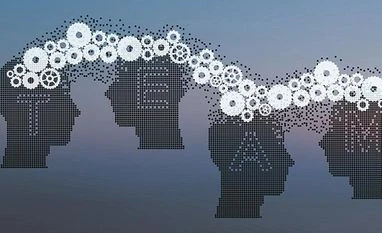
If focus shifts to cognitive diversity, it could provide an easy way around doing the hard work of raising the low numbers of certain sections of employees in the ranks, in leadership roles and on boards. Photo: istock
Discussing her work at Apple at an event last week about fighting racial injustice, Denise Young Smith, the company’s vice-president of diversity and inclusion, said, “There can be 12 white, blue-eyed, blonde men in a room and they’re going to be diverse, too, because they’re going to bring a different life experience and life perspective to the conversation.”
That’s right: A dozen white men, so long as they were not raised in the same household and don’t think identical thoughts could be considered diverse. After a furore erupted, Smith clarified her comments in an email to her team that was obtained and published by TechCrunch. It reads in part, “Understanding that diversity includes women, people of colour, LGBTQ people, and all under-represented minorities is at the heart of our work to create an environment that is inclusive of everyone”, and “I regret the choice of words I used to make this point”.
But Smith wasn’t the first to endorse the view in her initial statement. Those of us in the tech industry know that the idea of “cognitive diversity” is gaining traction among leaders in our field. In too many cases, this means that, in the minds of those with influence over hiring, the concept of diversity is watered down and reinterpreted to encompass what Silicon Valley has never had a shortage of — individual white men, each with their unique thoughts and ideas. This shift creates a distraction from efforts to increase the race and gender diversity the tech industry is sorely lacking.
This overlaps with the sentiments expressed in a screed by a Google software engineer that critiqued the company’s race and gender diversity efforts and ascribed the unequal representation of women in tech to “biological causes”. It included the line, “Viewpoint diversity is arguably the most important type of diversity.”
To be sure, cognitive diversity and viewpoint diversity are important. But working to increase them alone won’t do anything to address the well-documented shortcomings that plague tech companies. Whether companies do it intentionally or not, I worry that they will adjust the definition of diversity so that, conveniently, it’s already achieved.
If our focus shifts to cognitive diversity, it could provide an easy way around doing the hard work of increasing the embarrassingly low numbers of blacks and Latinos in the ranks of employees, in leadership roles, as suppliers and vendors, and on boards. The leadership of Apple, where Smith works, was only three per cent black and seven per cent Hispanic in 2016. A recent report by Recode found that women made up at most 30 per cent of leadership roles and no more than 27 per cent of technical roles at major tech companies. The percentages of black and Latino employees in leadership was even more dismal, ranging from four per cent to 10 per cent.

 "Tech's troubling new trend: Diversity is in your head")












 Connect with us on WhatsApp