Thyssenkrupp board accepts CEO resignation, backs Tata Steel JV

His departure creates a power vacuum as Thyssenkrupp prepares to present a revamped strategy for the group
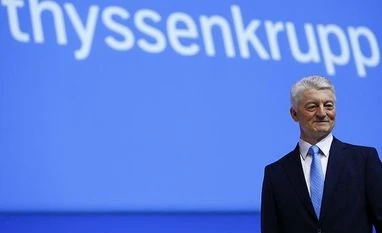
Heinrich Hiesinger, Thyssenkrupp
Photo: Reuters
Reuters
Last Updated : Jul 06 2018 | 7:54 PM IST
Thyssenkrupp will take its time to find a new boss after accepting Chief Executive Heinrich Hiesinger's resignation, a move which clears the way for a radical restructuring of the German industrial group.

The board did not appoint an interim CEO but said it had asked the remaining executives — Guido Kerkhoff, Oliver Burkhard and Donatus Kaufmann — to lead the company for now.

"In this difficult situation it is most important now for the company to remain on course," the supervisory board's Chairman Ulrich Lehner said in a statement.

Hiesinger's offer to resign, announced late on Thursday, came less than a week after he sealed a landmark joint venture deal with India's Tata Steel, the culmination of two years of negotiations that in the end came too late to placate investors hungry for change.

His departure creates a power vacuum as Thyssenkrupp prepares to present a revamped strategy for the group, which was forged by the merger of two German steel groups founded in the 19th century and currently spans submarines, elevators and car parts.

"I have not taken this decision lightly — quite the opposite," Hiesinger wrote in a letter to staff. "I take this step very consciously to enable a fundamental discussion in the supervisory board on the future of Thyssenkrupp."

Hiesinger had been due to present a new strategy for the group to the board next week, which analysts said would now likely be delayed until a new CEO is found.

"The succession to Dr Heinrich Hiesinger as Chief Executive will follow in a structured process," Thyssenkrupp said, without providing details on possible candidates or a timeline.

Activist shareholders Cevian and Elliott have both criticised Thyssenkrupp's performance under Hiesinger, with shares down 28 per cent since he took office in January 2011.

On Friday, the stock jumped as much as 6.6 per cent to the top of the pan-European STOXX Europe 600 index before giving up some of its gains to trade 0.8 per cent higher by 1312 GMT

One subscription. Two world-class reads.

Already subscribed? Log in

Subscribe to read the full story →
*Subscribe to Business Standard digital and get complimentary access to The New York Times

Smart Quarterly

₹900

3 Months

₹300/Month

SAVE 25%

Smart Essential

₹2,700

1 Year

₹225/Month

SAVE 46%
*Complimentary New York Times access for the 2nd year will be given after 12 months

Super Saver

₹3,900

2 Years

₹162/Month

Subscribe

Renews automatically, cancel anytime

Here’s what’s included in our digital subscription plans

Exclusive premium stories online

  • Over 30 premium stories daily, handpicked by our editors

Complimentary Access to The New York Times

  • News, Games, Cooking, Audio, Wirecutter & The Athletic

Business Standard Epaper

  • Digital replica of our daily newspaper — with options to read, save, and share

Curated Newsletters

  • Insights on markets, finance, politics, tech, and more delivered to your inbox

Market Analysis & Investment Insights

  • In-depth market analysis & insights with access to The Smart Investor

Archives

  • Repository of articles and publications dating back to 1997

Ad-free Reading

  • Uninterrupted reading experience with no advertisements

Seamless Access Across All Devices

  • Access Business Standard across devices — mobile, tablet, or PC, via web or app

Next Story



