
Tokyo December core consumer prices fall at fastest pace in over a decade
Tokyo consumer prices fell the fastest in more than a decade, while Japan's jobs market and retail sales remained subdued, data showed
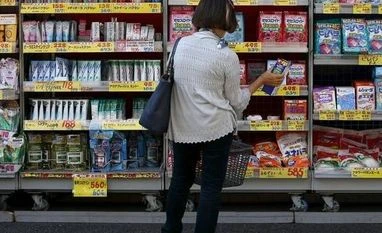 "Tokyo December core consumer prices fall at fastest pace in over a decade")
WebinarsNew
Deep DiveNew
Explore Business Standard
Tokyo consumer prices fell the fastest in more than a decade, while Japan's jobs market and retail sales remained subdued, data showed
By Kaori Kaneko
TOKYO (Reuters) - Tokyo consumer prices fell the fastest in more than a decade, while Japan's jobs market and retail sales remained subdued, data showed on Friday, raising the risks of a return to deflation as the COVID-19 pandemic hammers demand.
The world's third-biggest economy recovered in the three months to September from its worst postwar contraction, but a third wave of the coronavirus infections threatens the economic revival. The Bank of Japan unveiled a plan last week to examine more effective ways to achieve its elusive 2% inflation target.
The core consumer price index (CPI) for Japan's capital, including oil products but excluding fresh food, fell 0.9% in December from a year earlier, the steepest drop since September 2010.
That was deeper than economists' median estimate for a 0.8% fall and deepened from a 0.7% decline in November. The December drop was the fastest downturn since September 2010, when core consumer prices slumped 1.0%.
Nationwide data last week for November also showed the steepest price slump since late 2010.
"There is a chance that the nation will return to deflation due to the coronavirus pandemic," said Takeshi Minami, chief economist at Norinchukin Research Institute. "Private demand is weak as people, especially older people, stay home to keep from getting infected, making it difficult for prices to rise."
Japan's seasonally adjusted unemployment rate fell to 2.9%, better the median forecast of 3.1%, government data showed. In October, the jobless rate stood at 3.1%.
There were 1.06 jobs per applicant in November, up from the previous month's 1.04, labour ministry data showed, but still near September's seven-year low 1.03.
The pandemic remained a drag on consumer spending, with a renewed spike in infections raising fresh risks for a weakened economy.
Japanese retail sales a moderate 0.7% in November from a year earlier, the second straight gain but slower than October's 6.4% jump and below the median market forecast for a 1.7% gain.
(Reporting by Kaori Kaneko, Takahiko Wada, Kentaro Sugiyama and Yoshifumi Takemoto Editing by William Mallard)
(Only the headline and picture of this report may have been reworked by the Business Standard staff; the rest of the content is auto-generated from a syndicated feed.)
First Published: Dec 25 2020 | 7:51 AM IST


 Connect with us on WhatsApp