
UK PM Johnson warns no 'cast iron' guarantee over lifting Covid-19 lockdown
UK Prime Minister Boris Johnson has urged people to temper optimism around restrictions being lifted as a result of a successful vaccine rollout with patience
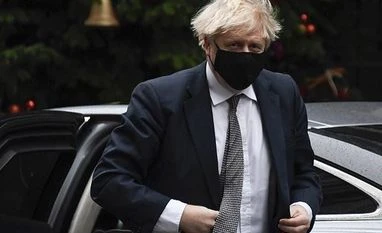 "UK PM Johnson warns no 'cast iron' guarantee over lifting Covid-19 lockdown")
WebinarsNew
Deep DiveNew
Explore Business Standard
UK Prime Minister Boris Johnson has urged people to temper optimism around restrictions being lifted as a result of a successful vaccine rollout with patience
UK Prime Minister Boris Johnson has urged people, in a strict lockdown to contain the spread of a new Kent variant of coronavirus for months, to temper optimism around restrictions being lifted as a result of a successful vaccine rollout with patience.
During a Downing Street briefing on Monday evening, Johnson said he can't offer any cast iron guarantees because while infections are falling, there are still more COVID-19 patients in hospitals than the peak of the pandemic in April 2020.
He hailed the "astonishing efforts" of everyone involved in the delivery of jabs after the government met its target of offering a first dose to 15 million of the most vulnerable this week and expanded the rollout further to over-65s.
The UK PM praised the "unprecedented national achievement", but said now was "no moment to relax".
"Next week I'll be setting out a roadmap saying as much as we possibly can about the route to normality, even though some things are very uncertain," Johnson said, in reference to the February 22 date he has previously set for laying out an unlocking plan in Parliament.
"Because we want this lockdown to be the last and we want progress to be cautious but also irreversible. So please continue to stay at home, protect the NHS and save lives," he said.
The prime minister said while he was "increasingly optimistic" about the possibility of easing restrictions, he couldn't guarantee the current lockdown would be the last ever.
"I'm very hopeful that we'll be able to go ahead and open things up, but to say I can give an absolute cast iron guarantee that we won't face further difficulties and have to think harder and deeper about some problems, no at this stage I can't," he warned.
The government hopes to start reopening schools as the first step to lifting lockdown restrictions, with March 8 a tentative date for the reopening. For the devolved nations, Northern Ireland is following a similar timeline, with Scotland to set out its schools plans this week and Wales to begin the process of reopening next Monday.
The UK recorded another 9,765 new coronavirus infections on Monday, the first time the daily cases figure has been under 10,000 since October 2. The daily death rate has also fallen to 230, but there is usually a lag in official statistics collated over the weekend.
(Only the headline and picture of this report may have been reworked by the Business Standard staff; the rest of the content is auto-generated from a syndicated feed.)
First Published: Feb 16 2021 | 2:41 PM IST


 Connect with us on WhatsApp