Home / World News / UK's May was unhappy with Chinese investment, Hinkley project
UK's May was unhappy with Chinese investment, Hinkley project
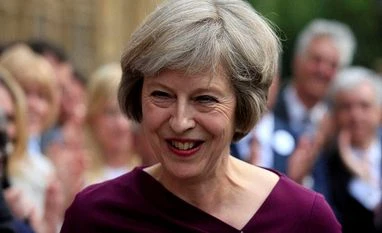
Britain's Home Secretary, Theresa May, makes a statement outside the Palace of Westminster in London after she won 199 votes for the Conservative leadership.
Theresa May was unhappy with the "gung-ho" approach her predecessor took to Chinese investment in Britain, a former colleague said on Saturday, after the new British prime minister cast into doubt a high-profile Chinese-funded nuclear project.
Britain had been due to sign off on Friday on a plan by France's EDF to build two new reactors at Hinkley Point, with financial backing from China General Nuclear (CGN), in a deal championed by David Cameron as a sign of Britain's openness to foreign investment.
Instead, just hours before the signing ceremony was due to take place May's government announced it would review the project again, raising questions over Britain's approach to infrastructure deals, energy supply and foreign investment.
"When we were in government Theresa May was quite clear she was unhappy about the rather gung-ho approach to Chinese investment that we had," Britain's former business secretary Vince Cable told BBC Radio.
"As I recall, she raised objections to Hinkley at that time."
Britain and EDF first reached a broad commercial agreement on the Hinkley Point project in 2013 while the Chinese involvement was sealed two years later when London laid on a state visit for President Xi Jinping, designed to cement a "Golden Era" between the two countries.
The about-turn came little more than a month after Britons voted to leave the EU in a referendum that forced the resignation of Prime Minister Cameron and the promotion of May.
In the weeks that have followed, May has been keen to state that Britain remains open for business. But she has also said the government should be able to step in to defend a key sector from foreign ownership if necessary.
Potential security risks have been cited as a concern about the project in some quarters. Last year, Nick Timothy, who worked closely with May in the past and is now her joint chief of staff, raised concerns about Chinese involvement in Hinkley.
Timothy said security experts were worried the state-owned Chinese group, which owns a stake of about a third in the project, would have access to computer systems that would allow it to shut down Britain's energy production.
The two new reactors at Hinkley Point, in southwest England, would provide about 7 percent of Britain's electricity, helping to fill a supply gap as coal plants are set to close by 2025.
Although EDF and CGN are responsible for the £18-billion ($24 billion) cost, Britain has committed to pay a minimum price for the power generated by the plant for 35 years.
Critics, including some British lawmakers and academics, say the country would be overpaying at that minimum price, which equates to double current market levels. Any attempt to renegotiate the terms could strain ties between London and Paris, at a time when it is starting to renegotiate Britain's exit from the EU.
The state-controlled utility EDF, which itself had to come through a bruising boardroom battle on Thursday in order to secure backing for the project, said it had not been given any advance warning of the review but was ready to start work.
China General Nuclear said on Saturday it respected the decision of the new British government to take the time needed to familiarise itself with the programme.
A decision is now due by the autumn, meaning it could come in September when the government is also due to give the go-ahead to a plan to expand either Heathrow or Gatwick airport, another major infrastructure project that has been delayed.
May's office did not have any immediate response to the comments from Cable but a government spokeswoman said on Friday it was "only right" the new administration looked at all the details before taking a decision.

 "UK's May was unhappy with Chinese investment, Hinkley project")

