US immigrants generate 36% of nation's innovation, finds NBER study

About 36% of the innovative output of the past three decades can be attributed to immigrants - who make up 16% of the country's inventors, the paper concludes
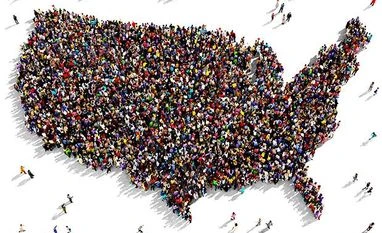
United States of America, US map, America map, US, USA, United States of America map, US population, Americans
Photo: Shutterstock
Augusta Saraiva | Bloomberg
2 min read Last Updated : Dec 29 2022 | 9:19 AM IST
Immigrant inventors in the US are “substantially” more productive than native-born scientists, according to a paper from the National Bureau of Economic Research.
 
About 36% of the innovative output of the past three decades can be attributed to immigrants — who make up 16% of the country’s inventors, the paper concludes. Foreign-born inventors are directly behind almost a quarter of all patents, and their work indirectly contributes to additional findings by US-born scientists.

“Over a third of US innovation can be attributed to this source, highlighting the importance of diversity, of combining inventors with different knowledge and backgrounds to push the innovation frontier,” according to the authors led by Shai Bernstein, a Harvard Business School economist.


The researchers looked at metrics including the number of patents, patent citations and the economic value of patents since 1990. The contribution of high-skilled immigrants is broad — not particularly concentrated in specific sectors — but they generate a significant share of innovative output in the technology, medical and chemical industries, according to the study.

The paper also finds that foreign-born inventors tend to have more collaborators than native scientists and are more likely to work with other immigrants. 

These inventors “appear to facilitate the importation of foreign knowledge into the US, with immigrant inventors relying more heavily on foreign technologies and collaborating more with foreign inventors,” the authors wrote. 

Immigration rebounded in 2022 after two years of restrictions and visa backlogs due to the Covid-19 crisis. The pandemic accelerated declines that started under former President Donald Trump, and the lack of immigrants is among the contributing factors to shortages in the labor market today. 

Even with the recent influx, there are about 1.7 million fewer working-age immigrants living in the US than there would have been if immigration had continued at its pre-2020 pace, separate research shows. About 600,000 of those missing immigrants would have been college-educated.

One subscription. Two world-class reads.

Already subscribed? Log in

Subscribe to read the full story →
*Subscribe to Business Standard digital and get complimentary access to The New York Times

Smart Quarterly

₹900

3 Months

₹300/Month

SAVE 25%

Smart Essential

₹2,700

1 Year

₹225/Month

SAVE 46%
*Complimentary New York Times access for the 2nd year will be given after 12 months

Super Saver

₹3,900

2 Years

₹162/Month

Subscribe

Renews automatically, cancel anytime

Here’s what’s included in our digital subscription plans

Exclusive premium stories online

  • Over 30 premium stories daily, handpicked by our editors

Complimentary Access to The New York Times

  • News, Games, Cooking, Audio, Wirecutter & The Athletic

Business Standard Epaper

  • Digital replica of our daily newspaper — with options to read, save, and share

Curated Newsletters

  • Insights on markets, finance, politics, tech, and more delivered to your inbox

Market Analysis & Investment Insights

  • In-depth market analysis & insights with access to The Smart Investor

Archives

  • Repository of articles and publications dating back to 1997

Ad-free Reading

  • Uninterrupted reading experience with no advertisements

Seamless Access Across All Devices

  • Access Business Standard across devices — mobile, tablet, or PC, via web or app

Topics :USAUS immigrantsUS economyeconomyTop 10 headlines

Next Story



