
Wall St see-saws as momentum slows after 5-day rally; health stocks gain
Kraft Heinz dropped more than 5% after the company's quarterly profit and sales missed analysts' estimates
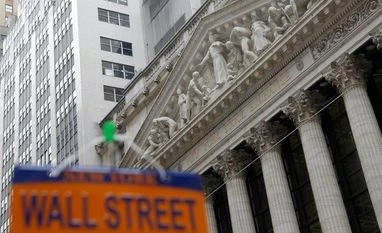 "Wall St see-saws as momentum slows after 5-day rally; health stocks gain")
Explore Business Standard
Kraft Heinz dropped more than 5% after the company's quarterly profit and sales missed analysts' estimates
US stocks swung between losses and gains on Friday as lower US crude oil prices and disappointing earnings reports from Kraft Heinz and other consumer companies sapped some of the momentum built in the past five sessions.
Still, even at current levels, Wall Street's three major indexes are set for a strong finish to the week, firming their pull back from last week's sell-off as investors shrug off inflation fears and focus on economic and earnings growth.
Kraft Heinz dropped more than 5 percent after the company's quarterly profit and sales missed analysts' estimates due to lower shipments for nuts, natural cheese and cold cuts in the United States.
VF Corp fell 7.5 percent after the apparel and footwear maker reported quarterly profit and revenue slightly below analysts' estimates.
PepsiCo and Walmart both fell over 1 percent, and along with Kraft Heinz pulled the S&P consumer staples index down 0.45 percent.
Energy stocks were a bigger drag though, falling 0.75 percent as U.S. crude prices fell half-a-percent.
By 9:37 a.m. ET, the Dow Jones Industrial Average had gained 0.13 percent to trade at 25,233.18. The S&P 500 was up 0.02 percent at 2,731.68 and the Nasdaq Composite rose 0.02 percent to 7,257.81.
The S&P and Dow each gained 4.3 percent in the past four sessions, putting the S&P on track for its best week since January 2013 and the Dow's best since November 2016.
The Nasdaq's 5.6 percent gain since Monday has set it on course for its strongest week since December 2011.
"A long-term uptrend in the market is viable given how strong economic fundamentals and earnings are. What's a caused a rebound from the correction is just that we're simply back on that trend," said Randy Frederick, vice president of trading and derivatives for Charles Schwab in Austin, Texas.
Helping limit the losses were gains in healthcare and technology stocks - two of the four sectors among the 11 major S&P sectors that were higher.
Economic data also painted a healthy picture. Homebuilding increased to more than a one-year high in January, boosted by a rebound in the construction of single-family housing units.
Despite the underwhelming reports Friday, the earnings season has been fairly strong, which along with expectations of further growth from tax cuts, has helped pulled investors back into the stock market.
Nearly 77 percent of the S&P 500 companies that have reported fourth-quarter results so far have topped earnings estimate, above the 72 percent average beat-rate of the past four quarters.
The CBOE Volatility index - a measure of implied near-term volatility on the S&P 500 - dipped half-a-point to 18.55 points and retreating further from its peak of 50 points last week.
Declining issues outnumbered advancers on the NYSE by 1,367 to 1,161. On the Nasdaq, 1,232 issues fell and 1,148 advanced.
First Published: Feb 16 2018 | 10:34 PM IST

