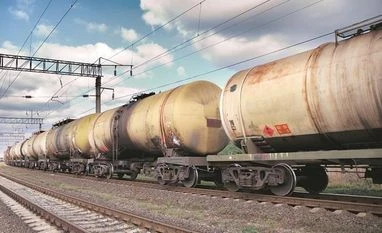
Britain will face shortages of fuel, food and medicine if it leaves the European Union (EU) without a transition deal, according to leaked official documents reported by the Sunday Times, but whose interpretation was contested by ministers.
Setting out a vision of jammed ports, public protests and widespread disruption, the Times said the forecasts compiled by the Cabinet Office set out the most likely aftershocks of a no-deal Brexit rather than the worst case scenarios.
But Michael Gove, the minister in charge of coordinating no-deal preparations, challenged that, saying that the documents did set out a worst case scenario and that planning had been accelerated in the last three weeks.
The Times said up to 85 per cent of lorries using the main channel crossings “may not be ready” for French customs, meaning disruption at ports would potentially last up to three months before the flow of traffic improves.
The government also believes a hard border between the British province of Northern Ireland and the Republic of Ireland, an EU member, will be likely as current plans to avoid widespread checks will prove unsustainable, the Times said.
“Compiled this month by the Cabinet Office under the codename Operation Yellowhammer, the dossier offers a rare glimpse into the covert planning being carried out by the government to avert a catastrophic collapse in the nation's infrastructure,” the Times reported.
Earlier, asked about the Yellowhammer documents, energy minister Kwasi Kwarteng told Sky News there was “a lot of scaremongering around” and that Britain would be fully prepared for an October 31 no-deal exit.
The United Kingdom is heading towards a constitutional crisis at home and a showdown with the EU as Johnson has repeatedly vowed to leave the bloc on October 31 without a deal unless it agrees to renegotiate the Brexit divorce.
After more than three years of Brexit dominating EU affairs, the bloc has repeatedly refused to reopen the Withdrawal Agreement which includes an Irish border insurance policy that Johnson's predecessor, Theresa May, agreed in November.
“We face a national emergency, and parliament must now be recalled in August and sit permanently until October 31 so that the voices of the people can be heard, and that there can be proper scrutiny of your government,” the letter said.
Johnson will this week tell French President Emmanuel Macron and German Chancellor Angela Merkel that the Westminster parliament cannot stop Brexit and a new deal must be agreed if Britain is to avoid leaving the EU without one.
The prime minister is coming under pressure from politicians across the political spectrum to prevent a disorderly departure, with opposition leader Jeremy Corbyn vowing this week to bring down Johnson's government in early September to delay Brexit.

 "What no-deal Brexit means for Britain: Shortage of fuel, food and medicine")












