Who are the owners of the risky, worthless Credit Suisse's AT1 bonds?

Big money managers such as Pacific Investment Management Co. and Invesco Ltd. are among the largest holders, owning around $807 million and $370 million, respectively
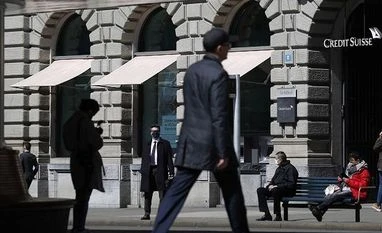
Credit Suisse
Photo: Bloomberg
Shuli Ren | Bloomberg
4 min read Last Updated : Mar 22 2023 | 12:48 PM IST
Credit Suisse Group AG’s junior bond holders are not happy. The UBS Group AG takeover, orchestrated by the Swiss government without the blessings of shareholders on both sides, will trigger a complete write-down of their $17.3 billion worth of Additional Tier 1 notes. Some are considering legal action.
 
Losses of this magnitude are unsettling to markets already shaken by the latest banking crisis. As such, it is of public interest to ask who are the owners of these risky bonds, introduced after the global financial crisis?

It is a puzzle that needs to be resolved.

Big money managers such as Pacific Investment Management Co. and Invesco Ltd. are among the largest holders, owning around $807 million and $370 million, respectively. BlackRock Inc. had about $113 million at the end of February, although the firm has reduced some of its holdings in recent weeks. Elsewhere, funds managed by Lazard Freres Gestion and GAM Investments were also exposed.

The Middle East has formed deep ties with Credit Suisse. In 2013, Qatar converted over $4.5 billion of a special type of debt into AT1 bonds, although it is unknown whether the Gulf state still owned any of them.

Or how about Credit Suisse’s own employees? For years, senior executives were paid in part in AT1 notes, Semafor reported. The news outlet did not offer concrete figures.

Beyond these, who owns the bulk of those bonds is as opaque as how the takeover deal was struck. 

Fortunately, banks are unlikely candidates, in that they are heavily penalized for owning peers’ capital instruments. Bloomberg Intelligence offered a good example. In Japan, investing in another lender’s AT1 notes carries a 1,250% risk weight. This means banks must hold at least $1 of their own equity for every dollar of AT1 notes they have in their securities portfolio. 

Also read: Swiss govt temporarily suspends bonus payouts to Credit Suisse staffers

Mom-and-pop investors should also be largely spared. In many jurisdictions, retail investors are not allowed to buy AT1 notes because of their complexity. Hong Kong, for instance, is obsessed with consumer protection. Bonds traded over-the-counter — the market norm — are off-limits. As of 2020, only 64 out of the 1,574 bonds outstanding were offered to the public. As such, any exposure is likely to be indirect — probably through people’s mutual funds or exchange-traded-funds holdings — and relatively muted, given that these instruments tend to be diversified.

This leads us to the ultra-rich. Wealthy individuals as well as small to midsized family offices in Hong Kong and Singapore have gobbled them up, and a lot of them are “in shock,” according to The Financial Times. JPMorgan Chase & Co. concurs, commenting in a recent report that “we do not have data on who holds AT1, but we expect it to be held by institutional investors as well as private bank clients.” Just like notes issued by Chinese real estate developers, AT1 bonds are tempting in that they offer juicier coupon payments than plain-vanilla deposits. One Credit Suisse bond issued last year that was paying 9.75% was particularly popular. 

For years, Asia’s wealthy have been the profit center at Credit Suisse’s crown-jewel wealth management division. They have been shaken by this fallout, unsure for weeks whether their money was safe with the Swiss bank. Now, some may be looking at actual losses — to the tune of billions of dollars. Do they still have faith in their private bankers?

Credit Suisse is putting on a brave face, urging calm among its employees and carrying on with its annual investment conference in Hong Kong this week. (Media has been uninvited, to this columnist’s dismay). But deep down, its senior executives must know that the crazy, rich, anxious Asians are not happy, and the Swiss brand is not as prestigious as before. 

Disclaimer: This is a Bloomberg Opinion piece, and these are the personal opinions of the writer. They do not reflect the views of www.business-standard.com or the Business Standard newspaper

One subscription. Two world-class reads.

Already subscribed? Log in

Subscribe to read the full story →
*Subscribe to Business Standard digital and get complimentary access to The New York Times

Smart Quarterly

₹900

3 Months

₹300/Month

SAVE 25%

Smart Essential

₹2,700

1 Year

₹225/Month

SAVE 46%
*Complimentary New York Times access for the 2nd year will be given after 12 months

Super Saver

₹3,900

2 Years

₹162/Month

Subscribe

Renews automatically, cancel anytime

Here’s what’s included in our digital subscription plans

Exclusive premium stories online

  • Over 30 premium stories daily, handpicked by our editors

Complimentary Access to The New York Times

  • News, Games, Cooking, Audio, Wirecutter & The Athletic

Business Standard Epaper

  • Digital replica of our daily newspaper — with options to read, save, and share

Curated Newsletters

  • Insights on markets, finance, politics, tech, and more delivered to your inbox

Market Analysis & Investment Insights

  • In-depth market analysis & insights with access to The Smart Investor

Archives

  • Repository of articles and publications dating back to 1997

Ad-free Reading

  • Uninterrupted reading experience with no advertisements

Seamless Access Across All Devices

  • Access Business Standard across devices — mobile, tablet, or PC, via web or app

Topics :Insight EdgeCredit Suisseat1 bondsUBS Groupfinancial crisis

Next Story



