Women on superbikes making China Ducati's No. 2 market
Luxury models defy demand slump caused by bike restrictions
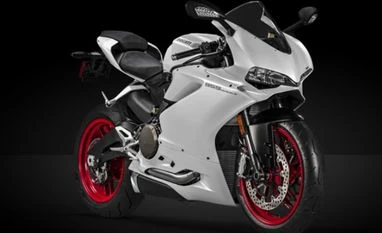
Bloomberg There are few things Laura Wu likes more than to take her Ducati 899 Panigale for a spin on the country roads outside Beijing. With five other high-performance motorcycles in her garage, the 35-year-old represents today's Chinese biker who manufacturers are clamouring to please.
With China's motorcycle market in decline, makers of superbikes, including Ducati Motor Holding SpA and Harley-Davidson Inc., are adding lighter, sleeker and less powerful models to their offering, trying to appeal to well-heeled novice riders and, especially, women.
The strategy seems to be working. Motorcycle sales in China almost doubled for Ducati and surged 74 per cent for BMW AG in the first half from a year earlier, defying a 15 per cent slide in all new bike sales, according to the China Association of Automobile Manufacturers. The country is poised to become the second-biggest for Ducati in three years.
"We used to assume motorcycles are toys either for middle-aged paunchy men or for young street hoodies," said Wu, who often zips around Beijing on a Vespa scooter for her daily commute to work as an angel investor. "Riding a motorcycle can be a symbol of the independence of women."
Ducati, founded in the Italian city of Bologna 90 years ago and now owned by Germany's Volkswagen AG, was keeping women and first-time motorcyclists in mind when it introduced in China the Scrambler Sixty2, which has a 399-cubic-centimetre engine, and the 1,198-cc Multistrada 1200 S this year, Marco Elli, head of Ducati China, said.
Ducati is bringing more models to China as biking gains popularity as a form of recreation. The government last month said it will exempt foreign motorcycle makers from ownership limits in their manufacturing operations. While more than 170 cities in the Asian nation have banned or restricted motorcycles, some smaller cities, such as Zhuhai and Langfang, have been easing regulations since 2013.
Ducati sold almost 1,000 units in the first five months of 2016, spurred by demand for Monster, Diavel and Scrambler models, Elli said, adding that he expects China to surpass Thailand this year to become Ducati's biggest market in Asia, excluding Japan. The Scrambler will be priced at 83,800 yuan ($12,600) and target youth, while its highest-end superbike that sells for as much as 489,000 yuan will be aimed at middle-aged bikers with higher incomes, he said.
"We understand the motorcycle culture here is growing," Elli said inside a Ducati showroom in Beijing. "The interest in riding a bike goes beyond the bans, and people who buy a bike may anyhow find a way to ride wherever it's possible."
The restrictions, coupled with a preference for cars and electric bicycles, have caused China's motorcycle market to shrink.
© 2016 Bloomberg

 "Women on superbikes making China Ducati's No. 2 market")

