From Railways to IAS: Women grossly under-represented in govt jobs

About 19% of promotions in PSBs in 2015 were those of women against a 22-23% representation
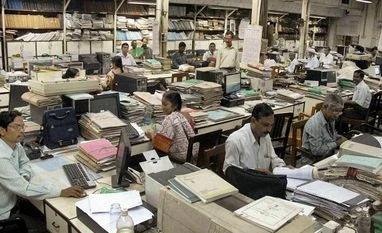
women workforce
The gender balance in PSBs is one of the best among public jobs
Abhishek Waghmare New Delhi
4 min read Last Updated : Mar 23 2019 | 3:11 AM IST
Going a step ahead of the long-standing demand for women’s reservation in Parliament and assemblies, the Congress has promised women a third of seats in new government jobs if voted to power.

The enormity of this challenge, however, is evident from the dismal situation in government services, where women’s representation is less than 15 per cent. The situation is worse at top government posts. In a department, women are more likely to be holding lower and clerical posts, the official data shows. Only 7 per cent of employees in the Indian Railways are women, according to the data.

Similar is the situation in the police forces, where nationwide, only 7.3 per cent are women in state police, despite many states having 33 per cent reservation for them. If one looks at some paramilitary outfits, which include the Central Reserve Police Force (CRPF) and Central Industrial Security Force (CISF), their share is at 2.8 per cent.

However, in relatively sedentary and closed-office jobs such as those in banks, women fare better than the departments cited above. About 24 per cent of positions in public sector banks (PSBs) are occupied by women, data from the Reserve Bank of India shows. The ratio becomes skewed if one looks at hierarchies.


While women comprise more than 20 per cent among officers and clerks in PSBs, they have an abysmally low 6 per cent share in top posts: Executive grades and senior management, a parliamentary committee report states.

“Women tend to avail of schemes that prevent transfers at the cost of promotion. The need for staying at one place is dictated by family needs, which have skewed the gender ratio across hierarchies. The situation could be worse in private banks,” said a senior banker in a top PSB.

About 19 per cent of promotions in PSBs in 2015 were those of women against a 22-23 per cent representation, the report shows.


Yet, the gender balance in PSBs is one of the best among public jobs, some bankers said. The gender imbalance across hierarchies holds true for women in paramilitary outfits too. About 88 per cent of women in the CRPF, CISF, Border Security Force and the like are in Group C posts, meaning clerical and helping staff.

The situation is not much different in the Indian Administrative Service (IAS), Indian Police Service and other Class I services. As of 2016, 17 per cent of the serving IAS officers in India are women. While women’s representation is as low as 8 per cent in the Indian Foreign Service, it is way lower at 4 per cent in the Indian Forest Service, according to the data compiled by the statistics ministry.

“The share of women is rising in the IAS. It was near-stagnant at less than 10 per cent at the time I had joined in the late 90s, and it comes as a relief if it has increased to 17 per cent,” said a Union joint secretary.

But when it comes to top jobs that require less dynamism than scholarship, women are represented better. About 30 per cent of officers in the Indian Economic Service and 24 per cent in the Indian Statistical Service are women.


Only about 11 per cent of judges of the High Courts and the Supreme Court are women, the recent data tabled in parliament shows.

The government's flagship programme Beti Bachao Beti Padhao intends to change this from the bottom. However, the political Opposition is holding on to its promise. Sushmita Dev, president of the All India Mahila Congress, said this was “mere tokenism”.

“With the call for reservation to women in government jobs, we have promised something tangible and measurable. Despite the issue being on their manifesto, the BJP did not introduce women’s reservation Bill in their tenure,” she said. 

One subscription. Two world-class reads.

Already subscribed? Log in

Subscribe to read the full story →
*Subscribe to Business Standard digital and get complimentary access to The New York Times

Smart Quarterly

₹900

3 Months

₹300/Month

SAVE 25%

Smart Essential

₹2,700

1 Year

₹225/Month

SAVE 46%
*Complimentary New York Times access for the 2nd year will be given after 12 months

Super Saver

₹3,900

2 Years

₹162/Month

Subscribe

Renews automatically, cancel anytime

Here’s what’s included in our digital subscription plans

Exclusive premium stories online

  • Over 30 premium stories daily, handpicked by our editors

Complimentary Access to The New York Times

  • News, Games, Cooking, Audio, Wirecutter & The Athletic

Business Standard Epaper

  • Digital replica of our daily newspaper — with options to read, save, and share

Curated Newsletters

  • Insights on markets, finance, politics, tech, and more delivered to your inbox

Market Analysis & Investment Insights

  • In-depth market analysis & insights with access to The Smart Investor

Archives

  • Repository of articles and publications dating back to 1997

Ad-free Reading

  • Uninterrupted reading experience with no advertisements

Seamless Access Across All Devices

  • Access Business Standard across devices — mobile, tablet, or PC, via web or app

Next Story



