In 2012, a new IWC Portuguese Chronograph in stainless steel retailed for $7,990. A year later, a very similar looking Portugieser Chronograph Classic was $12,700.
Two explanations come to mind: a) a Weimar-style hyperinflation, as prophesied by Senator Rand Paul's libertarian crowd, or b) the Classic was different in ways not obvious to the naked eye.
You can put away that copy of "The Tea Party Goes to Washington," the 2011 opus by Senator Paul; the answer is "b." The Classic contains what is known as an in-house movement, meaning that IWC manufactured the ticking, mechanical heart of the watch. The cheaper Chronograph has a movement made by an outside supplier, ETA, a subsidiary of the Swatch Group.
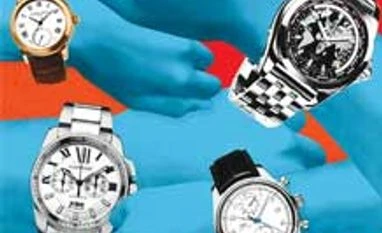
In the eyes of many watch aficionados, in-house movements carry an air of exclusivity and limited-production craftsmanship. As such, they are a key selling point for 2015 models like the Tudor North Flag and Pelagos, the Breitling Galactic Unitime and the TAG Heuer Carrera Heuer 01.
In recent years, other timepieces, like the Frederique Constant Classic Manufacture and the Cartier Calibre de Cartier Chronograph, have also earned bonus points from watch critics for their in-house movements.
In a sense, in-house movements are the selvage jeans of the watch industry: a signifier of authenticity and a symbol of indie craftsmanship oozing with insider cool, for which the cognoscenti are sometimes willing to pay a premium.
You know you're a watch geek if you care. Should the rest of us? Let's explore three answers: not really, sort of and definitely.
The "not really" argument goes like this. "There is no shame in a Swiss watch brand not making its own movements," said Joe Thompson, the editor of WatchTime magazine. For generations, he said, Swiss watchmakers have relied on different suppliers for different parts, just like in the auto industry of today or the smartphone industry. Even now, as in-house movements are in vogue, the majority of Swiss watchmakers rely on outsourced movements for at least some models. (Rolex and Zenith are among the exceptions.) Many of these outsourced movements are manufactured by ETA, which, in the watch world, mirrors Intel's dominance in supplying microprocessors to computer makers.
There is nothing inherently second tier about an outsourced movement. ETA's Valjoux 7750, for example, found in the IWC Portugieser Chronograph (the new name for the former Portuguese model), is considered something of a classic. In recent years, however, ETA started to restrict the flow of movements to the watch companies that compete directly with Swatch-owned brands, which include Omega, Tissot and Longines.
Fear of a dwindling supply was one reason some watchmakers began to invest in movements of their own. Another was snob appeal. In an era of artisanal everything, tastemakers have come to prize the concept of "small batch" in seemingly every facet of life: cheese, bourbon, watch movements.
Which brings us to the "sort of" answer. The term "in-house" has become fuzzy, said Jack Forster, the managing editor of Hodinkee, the popular watch site, who recently wrote a post titled "Has The Term 'In-House Movement' Become Obsolete?"
In-house can refer to a movement in which every part is made in-house, or it can refer to a movement sourced from suppliers but assembled in house, Mr. Forster said. Also, as he wrote in his post, there is no clear correlation between in-house and craftsmanship: "A Patek Philippe Star Caliber 2000 is an in-house movement; so is a Seiko caliber 7S26 in a Seiko 5 bought for a hundred dollars on Amazon."
"The perception among serious watch enthusiasts is that an in-house movement is more exclusive and interesting," Mr. Forster said. "The reality is much more nuanced."
Which, in a roundabout way, brings us to the "definitely" response. Exclusivity may only be a perception, but perceptions matter. Watch people care deeply about what's under the hood. A movement is a key part of a watch's back story, its DNA, its soul.
"People mostly buy watches as wearable art, as lifestyle or status indicators," said Ariel Adams, editor of the watch site aBlogtoWatch. "Like car engines, there is a particular satisfaction in knowing that the exterior of the machine and its interior are built together by the same people. There is a sense of synergy."
For an analogy, you could have a BMW with an Audi engine and it might perform the same. But would it really feel the same?
@ New York Times

 "Behind a watch's elegant face")


 Connect with us on WhatsApp