HMT slips into oblivion
One of the oldest brands in the country goes over to the other side; knocked out by competition, complacency and failure to change
Raghu Krishnan Bengaluru He not busy being born is busy dying', so goes the lyric of a well-known Bob Dylan song. This may well be the story of one of the country's oldest brands, HMT. A few years short of its 50th year, the brand that was once called the timekeeper to the nation is being laid to rest. As the shutters come down, HMT has been overwhelmed by an outpouring of support on social media, a surge in demand for the few remaining pieces in stock and elevation to a cult status among a select group, but the brand was dead long before the final call.
Says M G 'Ambi' Parameswaran, advisor, FCB Ulka Advertising, "Anyone who is around 50 years of age will remember HMT to be the first wrist watch he got. It is indeed sad to see the brand vanish."
With a cash assistance of Rs 427.48 crore, the government on Tuesday said that it is shutting down the three loss-making subsidiaries of HMT Ltd. The Cabinet Committee on Economic Affairs (CCEA) has also approved a voluntary retirement scheme (VRS) for about 1000 employees of HMT Watches Ltd, HMT Chinar Watches Ltd and HMT Bearings. The accumulated loss for HMT is Rs 2,579.61 crore.
HMT has been a brand in decline for a while now. It reported its first losses in 1994 (Rs 90 crore), the same year, Titan that had recently set up shop posted a profit. Malavika Harita, whose first job as a young management graduate was with HMT, is nostalgic about the brand. Now chief executive of advertising firm Saatchi and Saatchi Focus Network, she says, "HMT was the first company to launch quartz watches in India."
HMT came out with the first set of quartz watches in 1981. The Swiss watch industry was still grappling with the new technology. HMT took the lead, but backtracked within a very short time when the product failed to find enough customers. Mismanagement, high prices, poor positioning led to the product failing, but instead of tackling these problems, HMT decided to give up the product altogether.
Many say was the beginning of the end for the brand. Rajeev Raja, founder of SoundMusiq, says that the brand failed to move with the times. "To be evergreen, a brand needs to constantly adapt to changing times," he says. HMT did not do that
| THE TIMEKEEPER FALLS SILENT |
- First watchmaking factory set up in Bengaluru in1961, in association with Citizen Watches, Japan
- First batch of hand wound watches released by then Prime Minister Jawaharlal Nehru, the first watch was named Janata by him
- The first to launch quartz watches in India, in 1981, but poor response led HMT to switch back to mechanical watches
- In 1991, HMT set up a watch design centre; it was too little too late
- HMT has run up losses to the tune of Rs 2,579 crore
- Today HMT watches are sold on eBay, Snapdeal and Flipkart; they are expected to fetch a premium as stocks will soon run out
- Groups on Facebook that trade and transact HMT watches are keeping the brand alive
|
Subhash Kamath, CEO and managing partner, BBH India, says, "HMT was a household name in India for many years, making good quality, reliable watches. It's that very monopoly that led to its downfall." Kamath recounts an interesting anecdote from his early days in advertising. As part of a brand personality training session at one of his previous organisations, he asked a young team of executives to name a brand that best described them. One, quiet young boy said HMT. Like the watch, he said, he lacked style but was reliable.
Reliability has been the hallmark of HMT. Harita who belongs to a generation for whom an HMT watch was the ultimate gift says that while it dominated the watch market, complacency set in and then came the downfall. "I could see that things were going down and we quit," says Harita.
Its decline was hastened by competition from Titan and then other imported watches that flooded the market. Finally technology killed the brand as new gadgets replaced traditional watches. But "even four to five years ago, HMT figured in every brand survey in India," Harita said. Parameswaran says, "It takes superhuman effort to kill a brand as iconic as HMT. Obviously it was systematically destroyed by wrong policy decisions, wrong investments, wrong focus."
Kamath points out, "HMT didn't invest in new designs. They didn't communicate new values." A brand needs to connect with its consumers and understand their changing moods. Lulled by its near monopolistic status, the company never saw the need to invest in the product.
Still, the brand has a set of ardent followers. Its watches, Sona, Janata, Kanchan and Pilot are still being sought out as collector's items. When rumours started in 2014 of HMT closing down, prices of some mechanical watches tripled in the grey market. Kamath, however, says that HMT was never really an iconic brand. "It was a familiar and a recognised brand." An iconic brand he says is one with a purpose, a strong, consistent idea and personality that consumers love. He says, "A product is made in a factory. A brand is what consumers buy." HMT never made the transition.

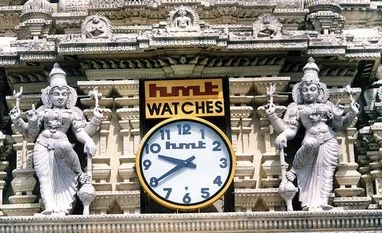 "HMT slips into oblivion")


 Connect with us on WhatsApp