Students of vocational courses under the National Vocational Education Qualification Framework (NVEQF) will have 'flexible' entry and exit points. According to Shankar S Mantha, chairman of All India Council for Technical Education (AICTE), the scheme provides multiple choices in both vocational and formal education systems.
AICTE, which comes under the Union ministry of human resource development (MHRD), launched NVEQF for implementation in polytechnics, engineering colleges and other university colleges from 2012-13. The programmes are sector-specific, and sectors such as information technology (IT), media, entertainment, telecommunications, mobile communications, automobile, construction, retail, hotels and fashion designing, among others, have been identified for implementation.
| CHOICES GALORE |
- The scheme addresses lack of uniformity in qualifications across institutions and no formal recognition of informal (prior) learning
- Helps students exit education system and enter job market as and when they desire. They can come back to education later
- Scheme to have seven certificate levels with each certificate level having approximately 1,000 hours each
- Each 1,000 hours to be made of certain number of hours for vocational competency-based skill modules
- Rest will be for general learning simultaneously integrated and providing a diploma for vocational education after the certificate level five or leading to a degree for vocational education after level seven in the university system (subject to their statutory approval)
- Colleges can become community colleges to offer courses under NVEQF
- Sector skill councils to set the occupational standards
- AICTE partners with American Association of Community Colleges for collaborating with community colleges in the US
|
The scheme will have seven certificate levels with each level, requiring about 1,000 hours of education and training yearly. For the vocational stream leading to a degree or diploma, these hours will have both vocational and academic components. The vocational component will go on increasing as the level of certification increases. A diploma will be awarded after certificate level five and a degree after level seven, subject to statutory approval.
BVoc (bachelor-vocational) has been notified, said Mantha. He added AICTE was seeking registration of colleges to adopt the community college concept. It is also seeking skill knowledge providers (SKPs) which would provide skill training. NVEQF is the framework, while the community college is the vehicle.
According to Mantha, there are about 40,000 colleges in the country and any of these can operate as a community college by offering education under NVEQF. "As on date, we have got 360 colleges and 100 SKPs to register online, and we will be rolling out NVEQF this year. The school boards, the boards of technical education and the universities also need to adopt a seamless integration of NVEQF in our education system," said the AICTE chairman.
Under this scheme, a student can choose to avail competency-based skill learning along with general education without changing courses and by moving through a certificate-level into a formal system of education and vice versa.
The colleges enrolling students under NVEQF would also sign a memorandum of understanding (MoU) with an SKP for skills training. AICTE will create the content until this model matures and critical mass is established and a self-driven and self-regulatory process evolves.
AICTE will seek to provide the requisite statutory approvals to any institution wishing to conduct these programmes from academic year 2012 throughout the country. A institution can choose a maximum of 500 students in any five sectors at 100 students per sector. The sector skill councils, according to Mantha, will set the occupational standards and the content would be based on these standards.
While India has 25 million students entering colleges after the 10th, 11th and 12th standards, Mantha said it was also a fact that almost the same number of students drop out. "Whereas Industrial Training Institutes (ITIs) create employable students - the skills provided are often terminal in nature. With no progression possible to acquire a degree or a diploma - seldom have such initiatives succeeded beyond a point and have remained an option only to a certain section of society," he pointed out.
Every certificate has skill credits and education credits. The skill credits rise as the certification level rises and, consequently, the education credits needed get lower The education credits serve to bridge the gaps when transcending to the formal education pattern. While these could be acquired in an asynchronous mode, the skills need to be acquired face-to-face. The certificate ratifies the performance of the candidate and the competency acquired in both skills and education.
Mantha explained all vocational education is sector-specific. AICTE has identified more than 60 specialisations under these sectors. Skill and education content is developed by respective industry bodies. AICTE is open to working on new sectors and specialisations with industry partners. It has 10,000 colleges in its domain and 30,000 others. The regulatory body has also signed an MoU with American Association of Community Colleges (AACC) for collaborating with community colleges in the US.
The industry is also a partner in this endeavour. "NVEQF is a framework that has industry as an equal partner. We have MoUs with BSNL, IL&FS and the British Commission," said Mantha.
On making NVEQF mandatory in all education institutes, Mantha said, "I wish this is so. There is no point in converting an existing division in a school or a polytechnic or a college to run NVEQF. What should happen is all these should create a new division of maybe 100 students that conducts NVEQF in different sectors and becomes the feeder mechanism."
He added the gross enrollment ratio, employment opportunities and, consequently, the nation's gross domestic product will change when new entrants come into the system and not when the current lot are re-aligned.
MHRD is looking to skill 500 million people in India by 2022, through its various initiatives. National Policy on Skill Development, approved by the government, has set a target for skilling 500 million persons by 2022. The National Council on Skill Development (NSDC) has a target of skilling 150 million by 2022.
CHOICES GALORE
| The scheme addresses lack of uniformity in qualifications across institutions and no formal recognition of informal (prior) learning
| Helps students exit education system and enter job market as and when they desire. They can come back to education later
| Scheme to have seven certificate levels with each certificate level having approximately 1,000 hours each
| Each 1,000 hours to be made of certain number of hours for vocational competency-based skill modules
| Rest will be for general learning simultaneously integrated and providing a diploma for vocational education after the certificate level five or leading to a degree for vocational education after level seven in the university system (subject to their statutory approval)
| Colleges can become community colleges to offer courses under NVEQF
| Sector skill councils to set the occupational standards
| AICTE partners with American Association of Community Colleges for collaborating with community colleges in the US

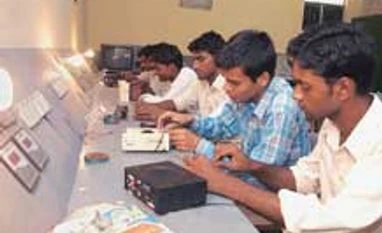 "New scheme offers flexi entry & exit points in vocational courses")


 Connect with us on WhatsApp