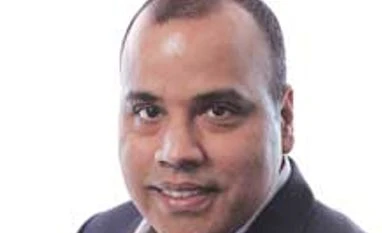
The relevance of a media agency has never been stronger: Vishnu Mohan
Interview with CEO, Havas Media Group, Asia Pacific
Vanita Kohli-Khandekar Earlier you had to come up with a wonderful product and then sell. Now the starting point is one person and his consumption and million touch points in his life. It has become more complex,
Mohan tells Vanita Kohli-Khandekar
What is the relevance of a media agency in an ecosystem which is disintermediating so fast, especially globally and especially because margins are so poor in this business? How should a media agency redefine itself? The relevance of a media agency has never before been as strong. If you are defining it as a trading agency that buys and sells media, the question is relevant. Technology has impacted consumer behaviour. Earlier you had to come up with a wonderful product and then sell. Now the starting point is one person and his consumption and million touch points in his life. It has become more complex. There is a greater role for 'holisticness'. The whole point of the ecosystem is to understand the consumer and advise the marketer. It is an important role to play if it is not seen as placement.
Do media agency balance sheets have the strength to play that holistic role on margins as low as one per cent? We have a wonderful organisation called Mobext - it is all about mobile consumption and the technology around it. (Mobext was launched as a global end-to-end marketing firm in 2007). So, yes, it needs a lots of investment. Sure, margins are thin on what is defined as the broking business. But they are getting bigger and bigger on the thinking part of the business. If you have evolved to focus on advise and strategy, clients are open to pay for value. There are all kinds of remuneration models emerging - one is 100 per cent on the head hours completed or part retainer part commission. But to get there we need to break down the silos that exist between (different) functions. Clients need to see a holistic picture and that comes only from true collaboration.
Havas, by virtue of its size, is best placed to deliver that. We have agility on our side. Larger organisations will find it difficult to do that. (The euro 1.77 billion Paris-based Havas is the smallest of the big six that dominate marketing communications globally. The others include WPP and Publicis)
Do you think digital is hyped in India because the metrics are not robust enough and because commissions are higher?
I don't think of ourselves or the industry as hyping digital because of more money. Digital is evolving across the world - more and more eyeballs are going to digital. Yes it gets less dollars than the eyeball time. Many countries are going through the evolution. For example, in some countries digital dollars are only 5 per cent of spends. However, in Australia they are 20-25 per cent of spends.
There are three factors that lead to increase in spends . First is infrastructure, which includes broadband, devices, bandwidth. Second is e-commerce. The more it spreads the more companies spend (online). Third is content. In India, content is there but both infrastructure and e-commerce need to catch up.
In the 17 countries you oversee, what are the patterns you find emerging on the marketers front and on the consumer front? Which markets are coping best with the changes?
The markets that have moved ahead are the ones that have done a great job leveraging infrastructure. For example, in Philippines, telecom firms offer highest bandwidth and communication is cheap, so consumers are savvy. It has one of the highest consumption of social media. Likewise for Indonesia. These two countries are fast becoming very interesting markets.
What are the challenges you face specifically in the Indian market?
From a traditional media perspective, India is a highly fragmented market. India is one of the most complex markets in the world because of the divided attention - the number of mobiles, TV homes etc mean that getting even a fraction of someone's attention is harder in media.
At the same time it is a market of great opportunity in terms of where we are and where we can be. Take any product, service or media. Look at their penetration level and compare it to their penetration in other markets. There is so much difference. So the opportunity is there. India is also host to some extremely important talent.
| COMMUNICATION MAN |
- Mohan joined the Havas Group in 2005 as Asia Pacific CEO. He currently oversees its offices in 17 countries in the region across 25 cities
- The IIM Ahmedabad graduate started with Y&R India, moving to Euro-RSCG (Havas' then India partner) and relocating to Singapore with the same agency in 1995
- Over the years he has worked in account management, strategic planning and general management
|

 "The relevance of a media agency has never been stronger: Vishnu Mohan")

