A below-normal monsoon can cause a big correction: Pratik Gupta
Interview with Managing director and head of equities, Deutsche Bank Group India
Puneet Wadhwa After the outcome of the Assembly elections, the markets' focus has shifted to global events such as the possibility of a rate hike by the US Federal Reserve (US Fed), Brexit and a rebound in crude oil prices.
Pratik Gupta, managing director and head of equities at Deutsche Bank Group India, tells Puneet Wadhwa that as short-term investments rarely work and are fraught with risks, investors should look at equities with a three-year horizon. Edited excerpts:
What is the road ahead for the markets given various headwinds? What are the key events to keep a tab on? Domestically, the main event is the monsoon given the distressed rural economy. Otherwise, the overall economy appears to be gradually - although unevenly - picking up. The renewal (or not) of the Reserve Bank of India (RBI) governor's term is also being watched closely. Globally, investors are worried about Brexit (June 23), rate hikes by the US Fed, and any sharp fall in the Chinese RMB. There's also a growing worry about the political uncertainty in the US.
Have the markets celebrated the prospects of a good monsoon a bit too early? What is your outlook on inflation and key rates in this backdrop? The market is already assuming a normal monsoon; so, a below-normal monsoon can cause a big correction. Consumer inflation index is likely to stay around the five per cent level, and given that full transmission of earlier policy rate cuts hasn't happened yet, further RBI rate cuts are unlikely for the next few months. But, lending rates should trend down given the regime-shift in RBI's liquidity stance from deficit to neutral after six years.
How have the March quarter results panned out thus far? Which sectors are you overweight/underweight on from a 12-month perspective? By and large, corporate earnings have been in line or marginally better than expected. As in the previous two quarters, the
positive surprise was on earnings before interest, taxes, depreciation and amortisation (Ebitda) margins.
Companies from the cement, capital goods, oil & gas, utilities and media have posted positive surprise on Ebitda. While revenues have not surprised as much, rising WPI (wholesale price index) inflation (first positive print in 18 months) bodes well for corporates' top line. In particular, big worries on banks with large corporate lending books have come true, while retail lenders/ NBFCs (non-banking financial companies) have generally done better.
Going forward, we continue to recommend private banks (and select public sector banks), while underweighting telecom, pharma and IT at this stage of the economic cycle.
What is your advice to someone who a) wants to invest in the markets at the current levels, and b) someone who invested, say, a year ago? What are the next big drivers for markets? For both types of investors, they should look at equities over a three-year horizon. Short-term investing rarely works and is fraught with risks. On a two- or three-year horizon, even if valuations do not go up further - we believe that's possible given the likely lower interest rates as well as stronger domestic equity inflows - the recovery in corporate earnings growth should be the single biggest driver for the markets. This, in turn, should be driven by the economy's ongoing recovery, assuming normal monsoons, and no major global shocks.
What is your assessment of the two years of the Narendra Modi government purely from a reforms, policy and stock markets' perspective? What have been the key misses? The overall assessment is very positive given the big improvement in India's key macro-economic indicators despite the global headwinds and two consecutive poor monsoons, which offset the low oil price bonanza to a large extent.
Key wins are a big improvement in central government transparency/ efficiency, more effective use of the government's funds by cutting back on subsidy leakages and investing in physical infrastructure (especially roads and railways), and a sharp increase in foreign direct investment.
A structural clean-up of the banking system is underway, while similar chronic issues in the coal and power sectors are being addressed.
The big headline miss has been the goods and services tax Bill and many investors believe the government should have been more aggressive on public sector unit stake sales/strategic divestments to raise funds for infrastructure/rural development.

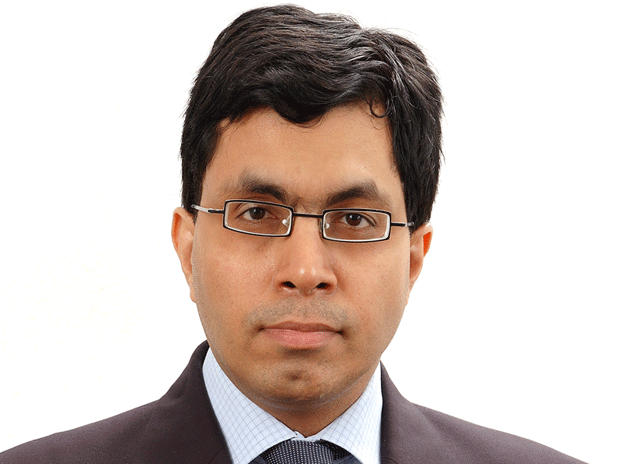 "A below-normal monsoon can cause a big correction: Pratik Gupta")


 Connect with us on WhatsApp