Ab tak 56 & return of decoupling
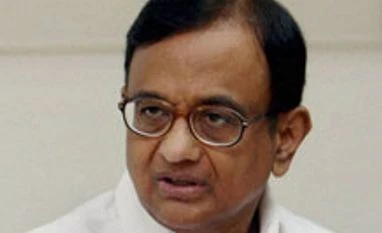
Chidambaram said his ministry had taken 56 measures over the past year to improve the state of affairs and get the economy back on the growth path
N Sundaresha Subramanian New Delhi This week, the finance minister will complete a year in his latest stint. When he hit the ground running on August 1, 2012, he had many fires to put out. One year later, he is still fighting fires: some old, some new. At a recent conference, he said his ministry had taken 56 measures over the past year to improve the state of affairs and get the economy back on the growth path. Let us focus on a few that had direct impact on the Street.
Many of the first steps the minister took included soothing the nerves of foreign investors on tax issues. This helped revive the sentiment.
He drew a red line on the fiscal deficit, a worry for foreign investors, and stuck to the targets. Inflation was pulled back from two-digit marks it was flirting with.
This bolstered the minister's vocal push for a hand of support for growth from the Reserve Bank of India (RBI) by cutting rates. Though RBI resisted initially, it finally had to give way. The minister also took steps to attack speculative investments in gold and real estate, often targets of the Street for its own woes. Empowering Sebi to attack ponzis was another key move.
In a few months, the Sensex moved from 17,000 to 20,000. Though it has had some corrections, it seems to have made a higher base of 18,400-18,500, from where it has bounced back at least thrice since Chidambaram took over.
At the end of July before Chidambaram took over, foreign institutional investor (FII) inflows in equities for calendar 2012 stood at Rs 50,417 crore. They had invested Rs 24,048 crore in debt. The combined monthly average of inflows was Rs 10,000 crore.
In the next five months, equities received flows of nearly Rs 78,000 crore and Rs 10,940 crore in debt. The average works out to Rs 17,700 crore every month, a jump of 75 per cent.
But, the law of diminishing returns seems to have come into play. In 2013, so far, Indian stocks have received FII inflows of Rs 65,784 crore, at a monthly average of Rs 9,397 crore. But, this year the debt score has been disappointing. In the seven months ending July, FIIs have pulled out Rs 21,168 crore from the segment, pulling down the monthly average of combined inflows to Rs 6,373 crore. You only know too well how this is hitting the current account and the rupee and the RBI and the rates, etc.
The "decoupling theory" floated to drive the Sensex for a few months after the subprime collapse in 2007 seems to have returned. The only problem is that it is now working in reverse. Therefore, even as the Dow Jones is checking into uncharted territory, the Sensex is heading south.
Indian market is not coupled with the US, which is doing well; instead it is suffering because the US is doing well. Or, just because of the "fear" that the US will do well and easy money from the Fed will be gone. The minister seems to have tried everything at his disposal. But, the magic switch seems elsewhere.
The man himself knew this too well. "There are some people who can move the markets without doing anything," he said hinting at Big Ben, "They can move just by hinting."

 "<i>Ab tak</i> 56 & return of decoupling")


 Connect with us on WhatsApp