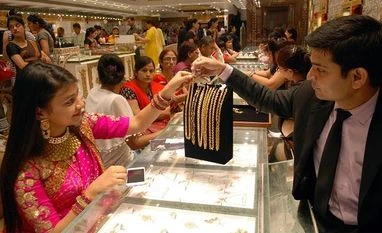
Samvat 2073 was a disappointing year for both gold consumers and jewellers. While gold imports grew year-on-year, the environment was quite challenging. On the positive side, however, as the year comes to an end the bullion industry has undergone a transformation and is in a much better shape than it was earlier this year.
In the last five Samvat years, except last year, gold has not performed well for investors. Investors made losses if they had bought gold around Diwali time. Even average gold prices for the last six years have remained almost static.
Meanwhile, despite the two disruptions – note ban and the implementation of goods and services tax (GST) – during the year, gold still managed to register higher demand over previous year. Even the import bill is up 50 per cent this Samvat year compared to a year ago and is highest since 2012-13, the year the government put restrictions on imports.
In Samvat 2073, the demonetisation announcement soon after Diwali restricted gold sales. While some jewellers were accepting the banned notes and selling gold at 30-50 per cent premium, the government immediately followed up with income tax raids. However, gold import started rising post demonetisation and the trend continued for the next six months. Good agriculture crop only improved the sentiment.
From April, there was brisk demand on Akshaya Tritiya buying. In the wake of GST, jewellers were replacing unaccounted gold in books with officially imported gold while selling old stock. This replacement demand continued for some time aided also by customers advancing their purchases before the GST date of July 1. There were expectations of fall in sales after GST, but some players used a loophole and for two months post GST, and imported over 30 tonnes of gold from South Korea under the bilateral free trade agreement. In August, the government closed this window.
In September demand fell as the government said brought gold purchases above Rs 50,000 under the Prevention of Money Laundering Act which meant that customers would need to furnish know your customer details including PAN to jewellers, which became a roadblock. This has been withdrawn this month.
Somasundaram PR, managing director, India, World Gold Council said, “Currently, gold demand seems to be recovering after the withdrawal of the anti-money laundering guidelines on jewellery buying. Policy reforms in quick succession in recent years have targeted transparency and the industry is transitioning under GST to a more organised structure, with long term benefits.”
Policy reforms aiming at transparency measures actually has initiated the process of transformation of the bullion industry. According to Sudheesh Nambiath, lead precious metal demand analyst, South Asia, GFMS TR, said, “There has been increasing shift observed from the unorganised to organised sector.”
Even small one-store jewellers have been seen adopting transparency and becoming sensitive to branding.
Physical gold is no longer the only choice. Investors are also buying sovereign gold bonds and digital gold, where buyers have the option to take delivery later.