The initial public offering (IPO) market is gaining traction and, increasingly, companies from non-traditional sectors are tapping it,
Anup Bagchi, managing director and chief executive officer at ICICI Securities tells Samie Modak, with some predictions on what's ahead and why. Edited excerpts:
Why hasn’t buoyancy in the secondary market translated into robust primary market activity in India? Buoyancy has returned to the markets after almost four years. Overall sentiment in the market seems positive for equity issuance. However, since the new government, companies have taken time to build traction on their balance sheets and so, we haven't seen too many filings with a large offer size. It is only since September 2014 that the number of listings have started to improve.
Do you expect the IPO market to see a sharp revival? Which sectors dominate it? In the first half of 2015, eight IPOs were successfully completed. About 15 companies are holding IPO cards, ready to hit the market anytime, another eight to 10 are waiting for approvals and filing activity is also on an upswing. This clearly shows revival of confidence in the capital market. All IPOs might not hit the market in the short term but will do so over time.
Traditionally, only large capital-intensive sectors like infrastructure and BFSI (banking, financial services and insurance) have raised capital, through IPOs and subsequent follow-on offerings. Over recent years, however, private equity has invested in many interesting companies which are now ready for public listing. We see the Indian capital markets are evolving. Companies from various sectors like e-commerce, health care, consumer goods, entertainment and logistics are tapping the market.
We have seen a fair bit of Qualified Institutional Placements (QIPs) or block trades this year. What have been the key trends in equity issuance in the first half of 2015? In the first half, 22 companies raised $2 billion (Rs 12,700 crore) through QIPs and $3.5 billion of block (trades) have been executed. Investors have become choosy on secondary offerings —only companies with strong fundamentals and performance have been able to garner interest. We believe this trend will continue and the market will evaluate companies on long-term fundamentals, rather than short-term gains.
How much of equity issuance do you expect in the remaining part of the financial year? In the remaining part, we believe the markets can see equity issuance of up to $10-12 billion (Rs 63,000-76,000 crore). The fund raising will primarily be dominated by government disinvestment and capital raising by banks.
There will also be huge issuances by the government in the second half. Is there enough investor appetite to absorb so much new paper? In the first half of 2015, India has seen $7 billion in foreign inflow and $4 billion of DII (domestic institutional investor) inflow. With its improved macro economic environment, stable government and better growth prospects, India has been at an advantage compared to its peers. There is significant interest from foreign investors for India equity paper.
The market has appetite to absorb large quantities of issues from Indian public sector undertakings (PSUs) but their fundamentals and performance will play a key role. Along with the other macro economic factors like the government's ability to adhere to the fiscal deficit target and achieve the tax revenue target, stability of the rupee and other global events.
Do you think the volatility in the secondary market will make deal making difficult? Do you see US interest rate increase impacting the market?
Health of secondary markets plays a very important role in the launch and successful completion of a deal. Global events will also continue to affect the markets. Hike in US interest rate may increase volatility in the short term due to the outflow of ‘hot money’, but will have minimal effect on emerging markets like India where investments are long term. Companies looking to tap the capital markets, will have to time the market and watch for global events for efficient execution and fund raising.
ICICI Securities has been one of the dominant player in the ECM space in India. What has been the strategy and what is it going to be going ahead?
We have built a solid team over the past few years and our strategy has been to gain leadership in all products – IPO, QIP, OFS, Blocks, Open Offers or Delisting. Besides, being part of the ICICI Group gives us a reach to corporates, an edge which we have in the investment banking space. Over the last fifteen years, we have invested in overseas offices to cover foreign institutional investors. We have developed high recall with both DIIs and FIIs, which is borne out in our market leading performance in the recent transactions. We continue to be bullish towards ECM space in India. ICICI Securities has been leader in getting niche companies backed by strong fundamentals to market. We will continue to follow the strategy and target to bring more such companies to market.

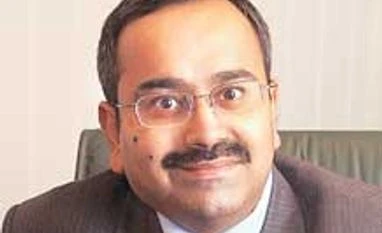 "Another $12 billion of equity issuance likely in FY16: Anup Bagchi")


 Connect with us on WhatsApp