Amid the Greek crisis and a stock storm in China, the Indian markets also witnessed after-effects of global shocks. But
Shankar Sharma, vice-chairman and joint Managing Director of First Global, says Indian markets are far safer as compared to other markets and a rise in mid- and small-cap stocks is inevitable. In an interview with Dev Chatterjee, Sharma says the key to economic turnaround is to push the rural economy, even as global factors such as China and a US Fed rate rise can pull down growth.
How do you see global risks, including the euro zone turmoil, China market meltdown and US monetary tightening, impact Indian equities? I don’t see any impact of the China and Greece issues on India. If anything, it enhances India’s safe haven status, especially juxtaposed against China. The FIIs (foreign institutional investors), hopefully, should now be able to contrast India’s robust market and financial architecture as compared to the laughable structures in China, where the government dictates what the market should be doing, which stocks should be trading, which not, and other fairly unbelievable diktat on companies. For example, that they must issue at least one positive announcement, or face penal action.
After last year’s sharp rally, the Indian markets are unchanged so far this year. What are your expectations from the market in the near term? I am extremely bullish on mid-caps and small-caps. That’s the space where I see massive action: the large-caps are good in part, but, honestly, fairly boring. After all, how much excitement can an Axis Bank or Sun Pharma incrementally deliver? But in the small and mid-caps, I see companies doing very exciting things -- things that can add value to the bottom line as well as to society.
How are Indian markets looking on the basis of various parameters like price to equity, return on equity, etc? I never pay attention to market aggregate valuations: it’s an absurdity. For example, how can you compare price to earnings (PE) of the market today, with a very low weighting of Reliance versus when the market used to have a far higher weighting of Reliance. The same is true for other sectors. The market’s composition keeps changing. So, therefore, does the PE, PB (price to book), and ROE (return on equity). So, how can you ever look at long-term valuation ratios, and say whether the market today is cheap or expensive. It’s amazing how the whole world does this rubbish analysis and then speaks gravely about it.
What are the policy measures required from the government to boost the economy and the market? Our rural economy is hurting big time. The UPA did a lot of good for the poor, one of the main reasons why the intelligentsia hated it: do anything for the rich, you are labelled progressive. Do even a bit for the poor, and you are populist.
This government has listened too much to brokers, fund managers and economists. It should now start listening to people, especially the poor. The government has to stimulate the rural economy.
Looking at the current volatility in the market, what’s your investment strategy? In large caps, buy momentum. In small caps, buy companies with debt, with some glimmer of hope in their business models. In general, I buy stocks generally shunned by the majority. It’s simply too boring to buy consensus stocks all your life.
Do you think disinvestment by the Indian government will help revive retail investors’ interest in the markets? Retail investors are already flocking to the market. Just see the mutual fund inflow numbers. This will increase even more when fixed income rates come down in India, as they will.
What’s the biggest risk to the markets in the rest of the financial year? A US rate rise, and, even more, a huge China slowdown.
Do you agree that with stalled projects now picking up pace, there is some recovery in the infrastructure sector? Stalled projects started picking up from the UPA’s time. But, I am not convinced projects were actually stalled. I think nobody has the will or the money to execute these unviable projects; hence, people have been sitting back and blaming both governments. Reality, I think, is different. Most projects were bid only to please Dalal Street. When managements start thinking like brokers, you know they are headed to the cleaners.
That said, I do see some modest uptick in infrastructure spend, and, hence, I am selectively bullish on this space.
What’s your view on the lifting of sanctions on Iran and its impact on the Indian markets and companies? No comment, since I haven’t thought it through.

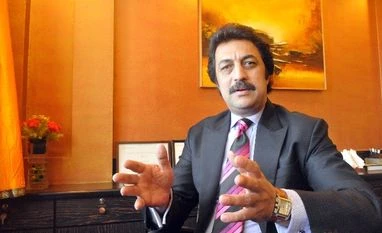 "Mid & small-caps to offer best returns: Shankar Sharma")


 Connect with us on WhatsApp