As global cash shrinks, party may be over for Indian equities

Even as BofAML expects India's NSE Nifty 50 Index to end 2019 at 11,300 - a 4% gain for the year - it won't be a smooth ride
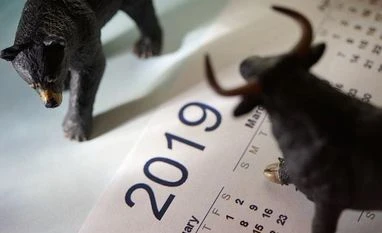
markets 2019, stock market
The brokerage said that domestic flows may not be enough to protect India from any global sell-off, especially in large-caps. It added that analysts’ estimates of a sharp earnings bounce-back doesn’t give a true picture of growth concerns
Ameya Karve | Bloomberg
Last Updated : Jan 09 2019 | 11:10 AM IST
The party’s over for Indian equities, with stocks headed for another tough year as a shrinking global cash pool dims prospects of an improving economy and expected recovery in company earnings boosting stocks, according to Bank of America Merrill Lynch.

“Imagine you are at a New Year party and happy to find out that there’s more room to dance but suddenly you realize that’s because everyone is leaving and the music has stopped,” Sanjay Mookim, BofAML’s India equity strategist, said at his office in Mumbai. “Indian equities are somewhat like that at the moment,” he said.

Still, purchasing by local funds made India the best-performing equity market in Asia last year, outperforming even the U.S. and the MSCI emerging markets index in local currency terms and leapfrogging Germany to become the seventh-largest in the world. The MSCI India Index trades at 17.2 times its estimated 12-month earnings, about 59 percent higher that the MSCI Emerging Markets Index.

“The expansion of multiples that has happened is not because the market has discovered growth, it has happened because of the lower cost of capital everywhere and that seven or eight year trajectory has turned,” Mookim said. Share prices have rallied far ahead of earnings estimates in the last few years and Mookim expects them to give up some of those gains as liquidity starts tightening.


Even as BofAML expects India’s NSE Nifty 50 Index to end 2019 at 11,300 -- a 4 percent gain for the year -- it won’t be a smooth ride. The key equity gauges may fall by “a double-digit percentage” in the first half, possibly triggered by political rhetoric preceding national elections expected around May, before stabilizing with the formation of a new government.

Mookim advises buying stocks such as consumer companies and farm-equipment makers and financiers that will gain from the government’s expected spending to boost rural incomes. He also prefers larger lenders as they are nearing the end of the bad-loan cycle and will report improved profits over the next few years. “If you have to be in India, banks are the only things that look okay; they are the only remaining standing opportunity in this market,” he said.


One subscription. Two world-class reads.

Already subscribed? Log in

Subscribe to read the full story →
*Subscribe to Business Standard digital and get complimentary access to The New York Times

Smart Quarterly

₹900

3 Months

₹300/Month

SAVE 25%

Smart Essential

₹2,700

1 Year

₹225/Month

SAVE 46%
*Complimentary New York Times access for the 2nd year will be given after 12 months

Super Saver

₹3,900

2 Years

₹162/Month

Subscribe

Renews automatically, cancel anytime

Here’s what’s included in our digital subscription plans

Exclusive premium stories online

  • Over 30 premium stories daily, handpicked by our editors

Complimentary Access to The New York Times

  • News, Games, Cooking, Audio, Wirecutter & The Athletic

Business Standard Epaper

  • Digital replica of our daily newspaper — with options to read, save, and share

Curated Newsletters

  • Insights on markets, finance, politics, tech, and more delivered to your inbox

Market Analysis & Investment Insights

  • In-depth market analysis & insights with access to The Smart Investor

Archives

  • Repository of articles and publications dating back to 1997

Ad-free Reading

  • Uninterrupted reading experience with no advertisements

Seamless Access Across All Devices

  • Access Business Standard across devices — mobile, tablet, or PC, via web or app

Next Story



