Shares of Bajaj Auto hit their lowest level during the current calendar year 2021, of Rs 3,381, down nearly 1 per cent on the BSE in Thursday's intra-day trade, in an otherwise firm market.
The stock of the two-wheelers maker was trading at its lowest level since December 28, 2020 and has corrected 22 per cent from its 52-week high level of Rs 4,361, touched on February 4, 2021. It had hit a 52-week low of Rs 3,040 on November 25, 2020. In comparison, the S&P BSE Sensex was up 0.69 per cent at 58,746 points at 01:18 PM.
In the past one month, Bajaj Auto has underperformed the market by falling 10 per cent on weak demand environment, as compared to a 3.6 per cent decline in the Sensex. A sharp decline in stock price has dragged Bajaj Auto's market capitalisation (market-cap) below Rs 1-trillion mark. Currently, the company's market-cap stands at Rs 98,058 crore, the BSE data shows.
Bajaj Auto will be removed from the 30-share Sensex with effective from December 20, and will be replaced by Information technology (IT) major Wipro, BSE's index construction arm Asia Index announced last week. IIFL Alternative Research estimates Wipro to see passive inflows of $166 million and Bajaj Auto to see outflows of $80 million on account of the rebalancing.
Meanwhile, the general auto industry slowdown in 2019, followed by Covid-19 pandemic in 2020 led to accelerated decline in demand for 2W. As per the management, the sales of 2W sales is reflection of bottom part of the economy, comprises of mass consumption groups (lower middle class and other socio-economic groups) which has been impacted due to the unprecedented events in the last two years' time span.
Analysts at IDBI Capital expect domestic 2W market to remain soft while recovery is expected from Q4FY22 onwards. International market continues to show improvement for Bajaj Auto.
"Management remained cautious on margin outlook amid raw material inflation & weak demand environment. On the other hand, factors such as healthy exports momentum both for 2W/3W and likely beneficiary of the Remissions of Duties and Taxes on Exported Products (RoDTEP) scheme, are favoring factors, in our view," according to analysts at Prabhudas Lilladher.
"Bajaj Auto's margin will be impacted by commodity headwinds in the near-term, although it will benefit in the long-term from premiumisation trend, opportunity in exports, and potential sizeable position in the 2W scooter market via electrical vehicles (EVs). While the domestic 3W market appears to be on the recovery path, it is still vulnerable to a possible disruption from electrification in the 3W space," analysts at Motilal Oswal Financial Services said in result update.
Read this article for free
Register to continue reading premium journalism and analysis from Business Standard.

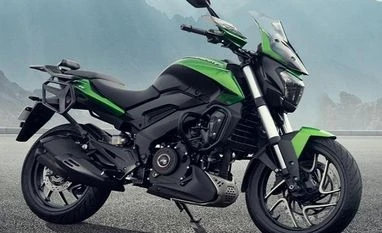 "Bajaj Auto's m-cap falls below Rs 1-trn as shares hit lowest level in 2021")












 Connect with us on WhatsApp